


Nisus Corporation is proud to announce that they have earned their Responsible Care® certification through the American Chemistry Council (ACC). Certification as a Responsible Care member requires participating chemical companies to fully implement 12 important guiding principles based on environment, health, safety & security (EHS&S) and ethical business practices, openly report on metrics related to EHS&S and undergo a rigorous third-party audit to ensure they are meeting EHS&S standards that far exceed industry and federal requirements for chemical manufacturing. Responsible Care certification also qualifies Nisus as a full member of the ACC.
“As a Responsible Care member, we commit to upholding the American Chemistry Council’s Responsible Care principles of striving to continually improve environment, health, safety, and security performance for our chemical operations. We are required to collect and annually report performance data in many areas of our operation,” said Lee Barrett, President of Nisus Corporation. Barrett continued, “The effort of our entire company, including the Executive team, operations, sales, marketing, product stewardship, and research and development, made this achievement possible. Special thanks go to Karson Guardado, Director of Quality and Design, who championed the Responsible Care project and was critical to our success.”
“I am honored to be part of such an amazing company that looks beyond the financial or the individual to instead focus on the team, the community, and the environment,” said Guardado, who also serves as Nisus’ Responsible Care Coordinator. “Nisus is always looking at ways to make our company and our community a better place, and Responsible Care is but a stepping stone on that journey. We could not have achieved this without our amazing people here at Nisus. I am so proud of who we’ve become.”
Attaining Responsible Care certification entails cooperation and coordination across an entire organization that shares an ongoing commitment to improving in areas of EHS&S. Maintaining certification requires constant continual improvement in critical areas, such as employee, product and process safety; chemical supply chain security; product stewardship; environment; energy; accountability through management system certification; and community outreach.
“Nisus, as a word, means a great effort towards attaining a specific goal,” said Barrett. “We see being a Responsible Care member as an embodiment of that ethos to always raise the bar higher for ourselves. We welcome the opportunity to meet that challenge so that we can continue to offer the best resources possible to our customers, our employees and our community.”
Nisus Corporation is a privately held company that manufactures sustainable products for the pest control, wood preservation and agricultural micronutrient industries at its facility in the foothills of the Great Smoky Mountains. Nisus is a recognized Responsible Care member of the American Chemistry Council.
NASHVILLE, Tenn. – The U.S. Department of Treasury announced today the approval of up to $116.9 million in funding under the State Small Business Credit Initiative (SSBCI) to support small business growth in Tennessee.
“Small businesses are the backbone of our economy, and they play a central role in building strong communities throughout Tennessee,” said Tennessee Gov. Bill Lee. “I’m pleased that this funding will help expand the growth of small businesses and encourage interested Tennesseans to utilize these funds to promote economic growth in our state.”
The Tennessee Department of Economic and Community Development (TNECD) will operate an initiative called Fund Tennessee, which is made up of a suite of programs from venture capital, to loan programs and technical assistance. TNECD allocated $46.9 million for the debt program that will work with participating Community Development Financial Institutions (CDFIs) and Minority Depository Institutions (MDIs) to serve rural to urban areas of the state, including underserved communities.
“With one of the top business climates in the country, Tennessee is the ideal location to create, launch and grow a business,” said TNECD Commissioner Stuart McWhorter. “We appreciate the U.S. Department of Treasury for approving this funding, which will support and expand Tennessee’s small business and entrepreneurial ecosystem.”
TNECD, in partnership with LaunchTN, allocated $70 million for the program, which is focused on direct investments in early-stage startups, along with a fund-of-funds strategy investing in emerging venture capital fund managers.
“Access to investment capital has been a challenge in Tennessee, so these funds will fill an immediate demand and support growth in startups that are primed to reach their potential,” said LaunchTN CEO Lindsey Cox. “We are eager to help founders across the state access this capital so they can continue innovating.”
TNECD and LaunchTN are hosting regional kickoff meetings to give an overview of the new Fund Tennessee initiative. The meetings will begin today and continue through April. To learn more or register for a kickoff meeting, visit here.
The SSBCI program provides funding to empower small businesses to access capital needed to invest in job-creating opportunities.
In addition to generating private investment in states across the country, SSBCI provides historic investments in U.S. territories, with significant impacts for growing access to credit in these markets. Through SSBCI, U.S. Treasury has allocated more than $300 million to support small businesses and entrepreneurs.
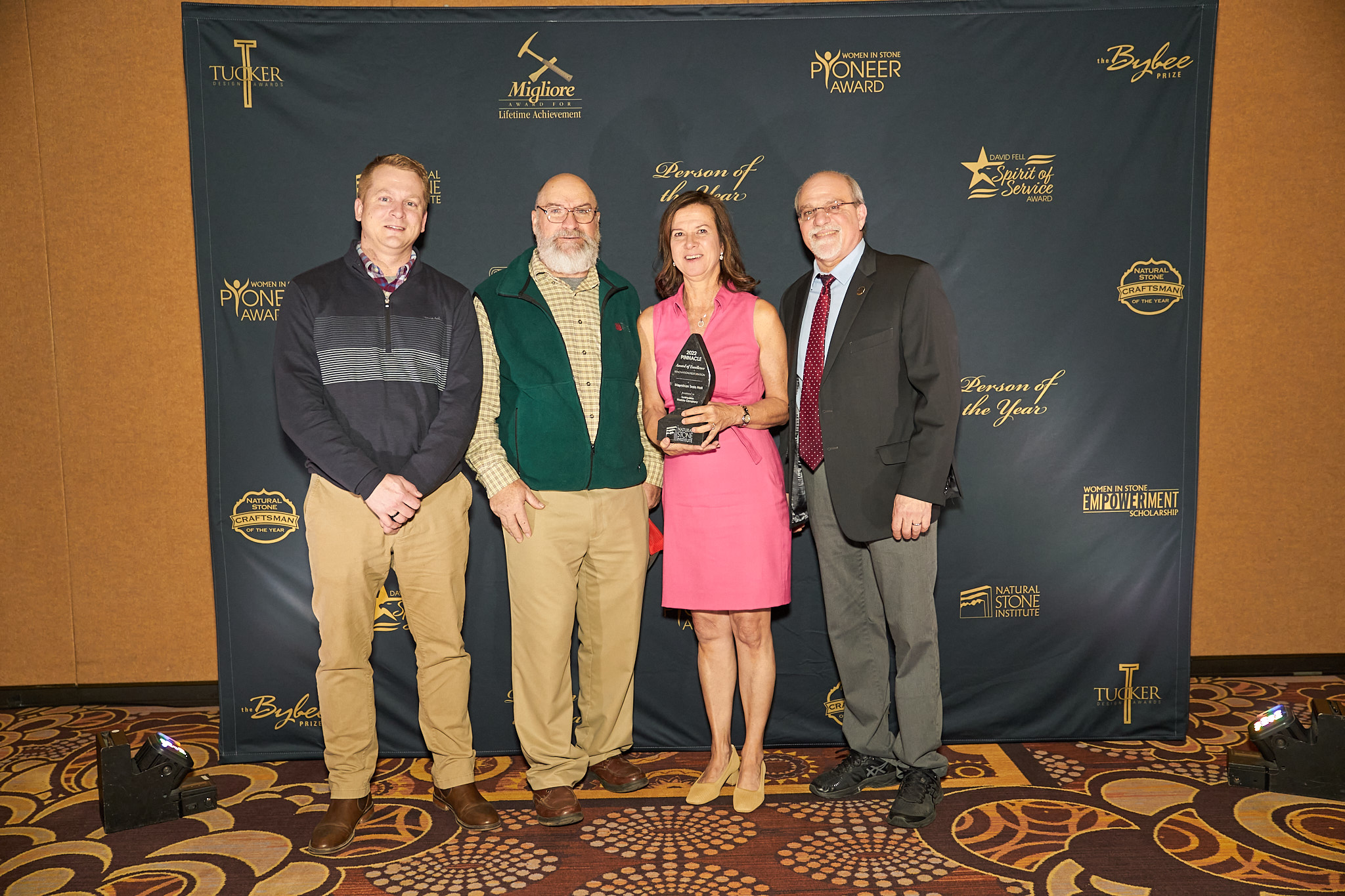
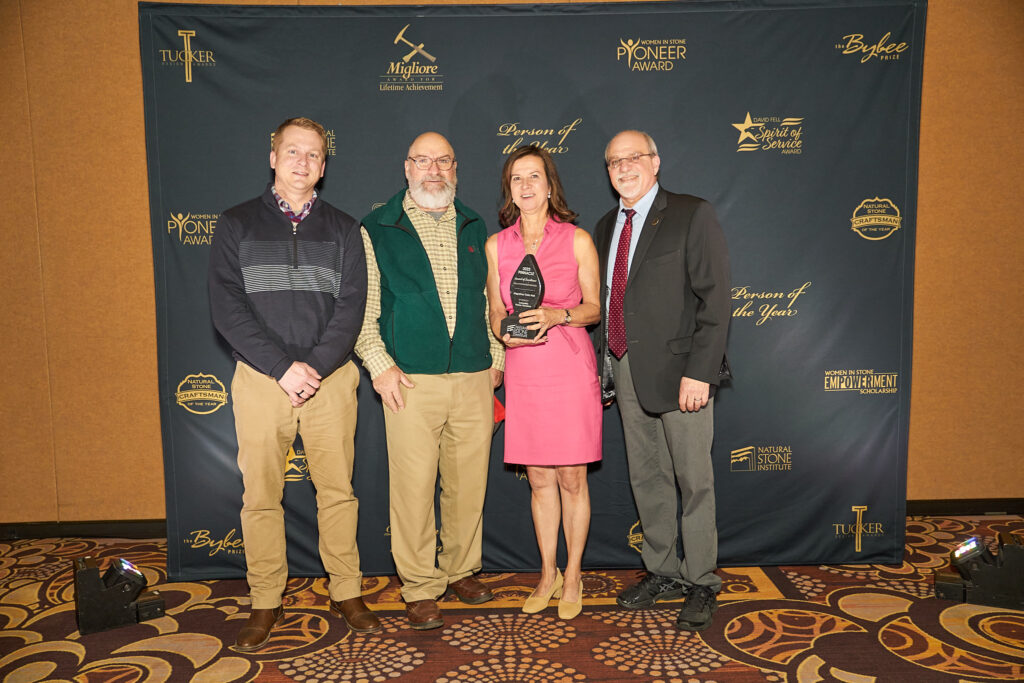
Tennessee Marble Co. was the recipient of the Natural Stone Institute’s Pinnacle Award for its work on the new Moynihan Train Hall at Penn Station. Also recognized on the project team were Swenson Stone Consultants and Miller Druck Specialty Contracting.
The University of Tennessee, Knoxville, and AT&T dedicated the new AT&T 5G Lab today at the UT Research Park at Cherokee Farm. The lab’s dedication is another step forward for the two institutions’ commitment and capacity to bringing high-speed technologies with meaningful uses to Tennesseans.
“Our communities gain major benefits when our faculty and students tackle real-world issues brought by companies who also live and work in those same communities. That’s what is happening today between UT and AT&T — we are committed to making life and lives better,” said UT Knoxville Chancellor Donde Plowman.
UT is one of only six universities in the United States to advance research initiatives in collaboration with AT&T. In 2021, UT agreed to work with AT&T on research projects using a 5G+ millimeter wave spectrum network in a lab environment.
“We have a long history of working with UT on projects that explored how to capitalize on emerging advanced technologies, and now we’re looking forward to what faculty and students here will learn about the capabilities of 5G high-speed broadband,” said Joelle Phillips, president of AT&T Tennessee. “It is exciting to think that innovations and applications which will improve lives tomorrow may begin as a ‘what if’ conversation in this new lab.”
Installation of the lab’s testbed equipment has been completed, and faculty and students can begin research and development across a variety of areas of interest.
“Our faculty and students are really excited to use this state-of-the-art 5G testbed to develop innovations with such far-reaching implications, including in precision agriculture, health care, and transportation,” said UT Vice Chancellor for Research Deborah Crawford. “We create high-impact solutions when we collaborate with organizations like AT&T.”
5G wireless technology provides high-speed mobile broadband networks with ultra-low latency and better data capacity to consumers.
Research conducted in the new lab has potential application for multiple sectors:
Transportation applications may include near real-time decision-making and control of vehicles, traffic monitoring, network optimization, secure 5G communications for transportation systems and allocating appropriate resources to different transportation services.
Telemedicine applications may include predictive modeling to allow for early detection of diseases, noncontact patient monitoring, remote surgeries and unobtrusive health monitoring.
Smart agriculture applications may include low-cost and robust hardware; sensors for crops, soil, and animal monitoring; self-driving tractors; and monitoring the health of livestock.
Sports applications may include immersive and interactive sporting experiences, virtual tours of stadiums, and player and team performance data.
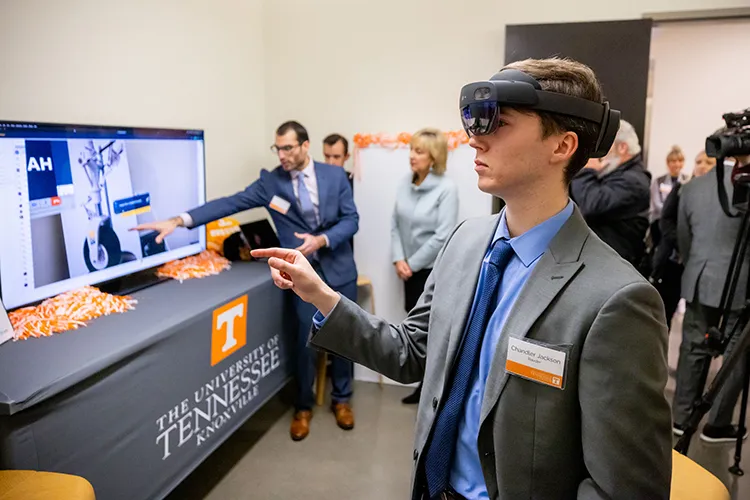
At the event, attendees were shown a demonstration showing how augmented reality could assist a technician performing critical work on an airplane’s landing gear while working with a subject matter expert in a remote location. Similar applications exist in fields like incident management and security, in which determining exact locations of people and assets are critical.
UT students and faculty demonstrated how 5G+ connections, coupled with multi-access edge computing, provide ultra-fast connectivity with ultra-low latency while keeping the data within the UT Knoxville network.
Tickle College of Engineering Professor Aly Fathy plans to make this a core research focus of the lab moving forward.
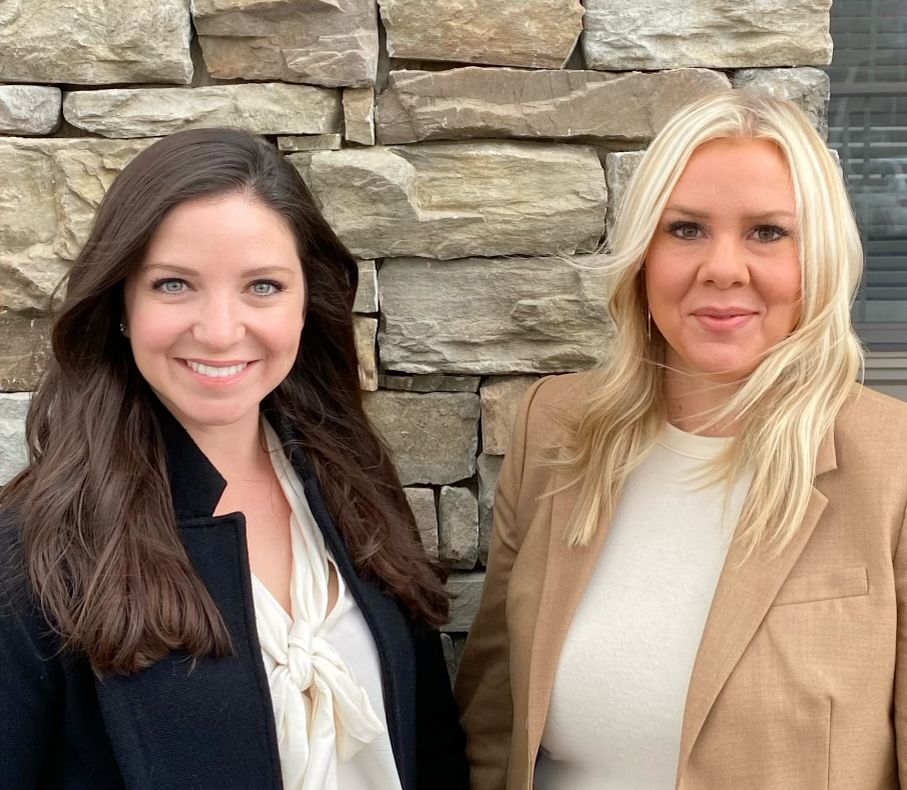
Recently, the Blount Partnership’s Director of Workforce Development Jessica Belitz and Director of Economic Development Lauren Emert graduated from the Tennessee Valley Authority’s (TVA) Valley Workforce Institute and Rural Leadership Institute, respectively.
Lauren Emert and Jessica Belitz.
The Valley Workforce Institute is designed to assist economic developers in understanding and selling their workforce assets and addressing talent pipeline challenges in today’s economy. The program is offered to community economic development professionals in the TVA service area to help foster long-term success.
The Rural Leadership Institute provides professional leadership training to rural community economic development professionals in the TVA service area.
Three two-day training sessions included skills development in workforce data analysis and application, identifying and addressing labor force challenges and opportunities, developing creative labor force solutions, foundations of leadership style and effectiveness, media relations, presentation skills and effectively marketing your community.
“A community’s ability to compete, gain jobs, and attract economic investments depends on local leaders being prepared, having product available, and understanding its workforce story to differentiate their community’s unique strengths,” said TVA Senior Vice President of Economic Development John Bradley.
Bradley added, “Rural America’s ability to compete, gain jobs, and attract economic investments depends on local leaders being prepared, having product available, and using effective leadership and communication skills to differentiate their community’s unique strengths.”
“Getting to meet and learn from peer leaders was so beneficial to help us continue to make Blount County a prosperous area for businesses, while making sure future generations have a place to work and call home,” said Belitz.
“These two programs are significant to our area, especially as both economic and workforce development have grown more intertwined over the last decade,” said Emert. “All the focus areas covered gave me new ideas on how to meet the challenges we face in fostering a stronger workforce for our employers.”
Over 300 individuals have participated in both programs over the last dozen years.
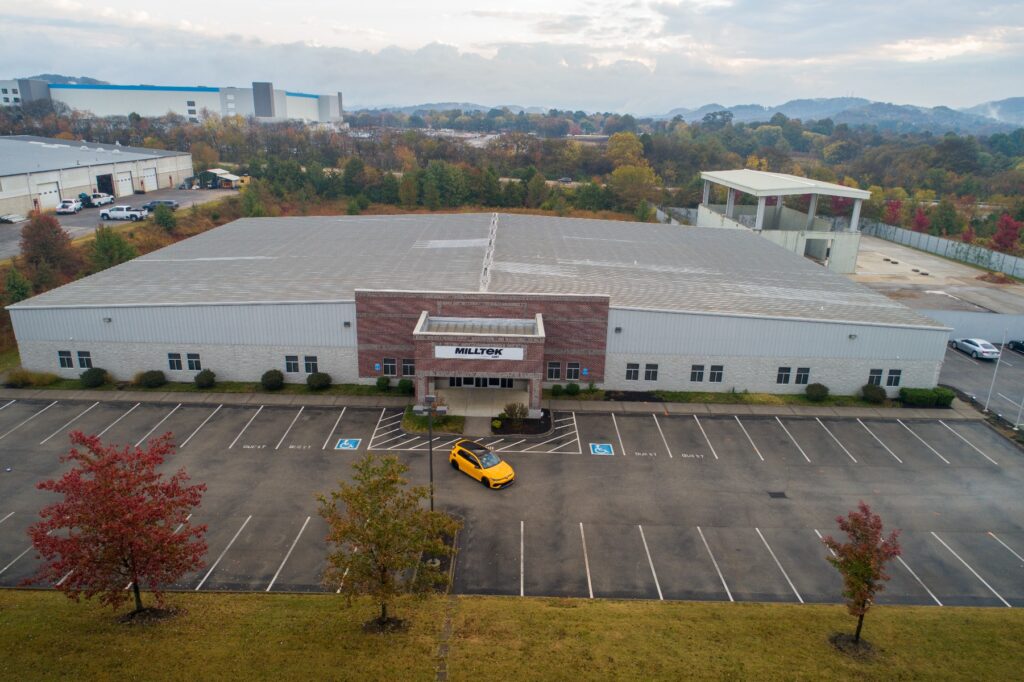
Milltek Sport, the leading premium automobile exhaust specialist, has announced it will open a brand-new facility in Alcoa, Tennessee, as part of a major five-year strategic expansion in the United States, with the formation of a new company Milltek Corp.
Located at 3202 Regal Dr., the brand new Milltek Corp facility opened its doors in August with the planned installation of an on-site 35,000-square-foot manufacturing and R&D facility within the next 18 months. With an initial capital investment of $2.5 million, the company will further invest $8 million and hire 35 employees over the next three years.
Through Milltek Corp, the company will build on two decades of sales growth within the North American market, allowing it to support its existing US dealership network and welcome more new specialist distribution partners to its portfolio.
Availability of Milltek Sport’s range of premium exhaust systems will increase significantly in North America, while the company continues to develop enhanced products for the latest high performance and prestige vehicles – including the new popular European vehicles like the Land Rover Defender V8, Volkswagen Golf GTI & R, BMW M3/M4 G-series, and rapid growth planned for US Domestic market vehicles such as the Dodge Challenger SRT Hellcat, RAM TRX, Ford Bronco and Jeep Gladiator.
“We’ve worked hard to remain at the forefront of manufacturer trends throughout our 39-year history,” said Steve Pound, Managing Director of Milltek Sport and CEO of Milltek Corp. “From forced induction and electrification, to tighter emission controls, our products continue to offer customers enhanced sound, quality, and durability, without compromising on compliance. The US domestic market has always been an exciting one for us, and plans for our next series of first to market systems for the US are already well underway.”
The new Alcoa facility, selected with the help of the State of Tennessee and the Blount Partnership, is situated in a prominent and accessible position for courier networks, and close to east coast ports for inbound sea freight.
“We enthusiastically welcome Milltek Corp to Blount County’s diverse set of employers,” said Matt Murray, chair of the Blount County Industrial Development Board. “It’s the investment of companies like this that add to the options residents have to obtain employment and begin a life-long career. We expect Milltek Corp to be a great community partner and look forward to building a working relationship with their entire staff.”
Milltek Corp is the company’s second overseas expansion in the last five years, following the opening of Milltek Sport GmbH, its successful German HQ based near the iconic Nürburgring race circuit. The latest move to the USA is expected to mirror the successful growth achieved within central Europe since 2017, aiding diversification into a new market segment.
Researchers at the Department of Energy’s Oak Ridge National Laboratory have developed a new method for producing a key component of lithium-ion batteries. The result is a more affordable battery from a faster, less wasteful process that uses less toxic material.
Lithium-ion batteries — used in products from appliances to cell phones, as well as in most electric vehicles — are composed of a cathode and an anode with an electrolyte in between. Ions move from anode to cathode through the electrolyte in a reaction that converts chemical energy to electrical energy.
The drive toward decarbonization and the demand for electric cars has increased the focus on sustainably producing energy-dense cathodes. However, traditional processing presents challenges.
The first obstacle is a reliance on cobalt, a rare metal mined and refined abroad. This dependence on foreign sources poses risks to American manufacturing supply chains and transportation infrastructure.
The availability of cobalt is not the only complication. The balance of other metals common in cathodes can also make the manufacturing process longer and more hazardous. For example, high nickel concentration has led to the widespread use of a chemical mixing method for cathode production that requires large quantities of ammonia for corrosive reactions. Using the toxic chemical increases costs, heightens health and environmental concerns, and wastes large amounts of water to reduce acidity.
ORNL researchers report in the Journal of Power Sources that they have developed a cleaner, cheaper, more efficient method for making a new class of high-capacity cathode material without cobalt. Instead of continuously stirring cathode materials with chemicals in a reactor, their hydrothermal synthesis approach crystalizes the cathode using metals dissolved in ethanol. The ethanol is safer to store and handle than ammonia, and afterward it can be distilled and reused.
“This novel process offers the key advantage of moving the cathode industry to cleaner and more cost-competitive production while putting less burden on our environment,” said ORNL’s Ilias Belharouak, the principal investigator for the project.
The hydrothermal synthesis method is also much faster, said ORNL lead researcher Rachid Essehli. The time required to make particles and prepare for the next cathode batch drops from as many as a few days to 12 hours.
In addition, the material produced has more uniform, round, tightly packed particles that are ideal for a cathode, Essehli said. Although the ORNL team has previously identified other cobalt-free combinations that work, the material developed through this study was better at maintaining stability throughout the battery charge cycle.
Because its properties are similar to those of today’s cobalt-based cathodes, the new material can be seamlessly integrated into existing battery manufacturing processes. A patent is pending on the technology, which is ready to be scaled up for commercial production by industry, Essehli said. “This cathode material can give more energy and decrease the cost of electric car batteries,” he said.
The research was funded by the DOE Office of Energy Efficiency and Renewable Energy’s Vehicle Technologies Office. It used resources of ORNL’s Center for Nanophase Materials Sciences and the Advanced Photon Source at Argonne National Laboratory. Both are DOE Office of Science user facilities.
UT-Battelle manages Oak Ridge National Laboratory for the U.S. Department of Energy’s Office of Science. The single largest supporter of basic research in the physical sciences in the United States, the Office of Science is working to address some of the most pressing challenges of our time. For more information, please visit https://energy.gov/science.
Leadership Tennessee announced that Blount Partnership Director of Economic Development Lauren Emert was selected to its Spring 2023 Leadership Tennessee NEXT cohort, a program offering Tennessee’s early and mid-career professionals personal and professional development while fostering a greater understanding of Tennessee and its assets. This class is the sixth cohort to complete the program.
“I am extremely honored to be part of this class and look forward to meeting and learning from professionals from across the state,” said Emert. “There is a great mixture of people from all different sectors and I’m anxious to view difference perspectives on how we can tackle issues that affect not only our region but also the state.”
Leadership Tennessee NEXT is welcoming a class of 29 rising professionals who represent the diversity of the regions and industries of the state. The class will meet four times during the program year, conducting sessions in Pickwick Landing, Knoxville, Memphis and Nashville. Over the course of the program, participants will grow their professional skills and build an activated network of rising leaders spanning the state, while learning about significant issues facing the state.
“Leadership Tennessee NEXT continues to offer opportunities for the state’s strongest and brightest rising leaders to engage in meaningful dialogue and development that will benefit Tennessee both now and in the future,” remarked Leadership Tennessee President & CEO, Alfred Degrafinreid II. “Class VI is met with a strong network of past LT NEXT members who are already impacting their communities and the state significantly. We are excited to welcome the newest cohort.”
Going into its 10th year, Leadership Tennessee has developed a network of over 500 members from both Leadership Tennessee NEXT and the organization’s longest initiative, its Signature Program, designed for those in the highest levels of organizational and community leadership across the state.
Leadership Tennessee fosters collaborative, non-partisan dialogue on issues of statewide importance by crossing geographic and professional boundaries and connecting a diverse network of problem solvers and engaged citizens.
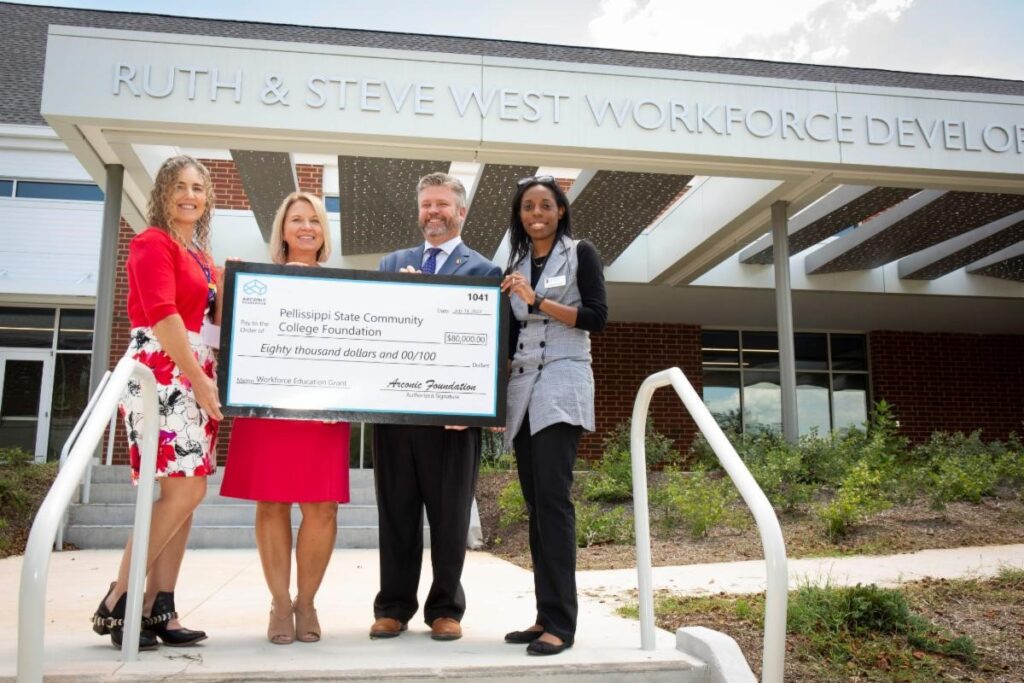
Arconic Foundation has awarded Pellissippi State Community College $80,000 to help Blount County juniors and seniors explore advanced manufacturing careers while still in high school.
Christy Newman of Arconic Tennessee Operations, second from left, presents a $80,000 grant from the Arconic Foundation to Pellissippi State to support new Career and Technical Education dual enrollment opportunities for high school juniors and seniors in Alcoa, Maryville and Blount County. From left are Associate Professor Kristi Leach, program coordinator for Electrical Engineering Technology, Newman, Pellissippi State President L. Anthony Wise Jr. and Blount County Campus Dean Priscilla Duenkel.
The Pellissippi State Credit to Credentials pilot project includes Career and Technical Education dual enrollment opportunities for students in 11th and 12th grades at Alcoa, Blount County, Maryville and other area high schools. Dual enrollment is a way for high school juniors and seniors to earn college and high school credit for the same course simultaneously, giving them a head start on college and helping them save money in the process.
As part of the Arconic Foundation-funded pilot, Pellissippi State will offer in spring 2023 a series of cohort-based Electrical Engineering Technology classes for high school students on the college’s Blount County Campus. Cohorts allow students to progress through academic programming as a group – in this case, taking classes Mondays through Thursdays with open lab time and academic support provided for them on Fridays.
“This pilot project addresses some of the most common barriers to dual enrollment participation, providing funds for tuition, fees, books and other course materials for up to four courses per participant, per semester,” explained Pellissippi State PresidentL. Anthony Wise Jr.
Classes will be taught in Pellissippi State’s new Ruth and Steve West Workforce Development Center.
“This program is a great example of how the new Ruth and Steve West Workforce Development Center at Pellissippi State is benefiting the community,” said Ryan Kish, Arconic Foundation president and treasurer. “The additional capacity and capability at the campus provides students with more opportunities to explore new courses and find a rewarding career path that works for them.”
The Credit to Credentials courses the college is offering will allow students to acquire certificates in Electronics Technology and Industrial Automation. While certificates are awarded for short-term training, the dual enrollment courses also count as credits toward Pellissippi State’s Associate of Applied Science in Electrical Engineering Technology.
“We are delighted to provide students a pathway to begin their college coursework while still in high school,” said Vice President for Academic Affairs Kellie Toon. “This opportunity will allow them a jumpstart to prepare for high-demand, high-wage jobs in the community.”
Enrollment for spring dual enrollment courses opened Oct. 19. Those interested in the pilot program should contact Margaret Ann Jeffries, dean for Engineering and Media Technologies, at 865.694.6483 or [email protected] for more information.
Area elementary and intermediate schools will soon be the recipients of Maryville College gift boxes, courtesy of a recent grant awarded to the institution by the Environmental Protection Agency.
The $100,000 grant was awarded in September and will allow MC students to create “Out of the Box Community Sustainability” packages that will be provided to fourth-graders in select East Tennessee schools.
“In a nutshell, we’ll be providing them with a series of boxes, each of them centered around environmental education and regionally connected to our area and Appalachia as a way to educate them about environmental issues,” said Adrienne Schwarte, a professor of Design and the coordinator of the Sustainability Studies minor at Maryville College.
“We wanted these ideas to be fun and educational for students, and it’s really important that the things in them are turnkey, so that when a teacher would like to add in an environmental education activity to enrich the class, they’re ready to go, straight out of the box,” she added. “It’s meant to be able to serve as an additional support mechanism for instructors, particularly around environmental education.”
The idea, Schwarte said, came from a class that she and Dr. Mark O’Gorman, a professor of Political Science and coordinator of the College’s Environmental Studies program, team teach each spring semester. In their Introduction to Environmental Issues and Foundations of Sustainability course (ENV/SUS 101) they were looking to integrate a project or assignment into the class that would allow the students to activate classroom environmental and sustainability knowledge in a more tactile and interactive way.
“We talk a lot about being change agents, and how they can be change agents around issues for the environment,” Schwarte said. “For our last project in the class, rather than having a more static individual, written assignment, we started off by having students come up with short little charettes/activities they could put together to educate others about an issue related to the environment.
“That first year, students got into groups, came up with concepts and ideas and had to write a proposal. We had some small community engagement grant funding each year to support those activities, so we bought the materials, and our very first year, we did these boxes as an activity on campus.”
The boxes run the gamut, Schwarte added, and include specific, concrete ways in which students can use the contents to make an environmental difference. One box, for example, contained all the materials along with instructions for making soap in a safe, effective and sustainable way.
“It’s about addressing the challenges of environmental problems, and although there are a lot of new technology materials used to tackle environmental problems, it’s also about implementing ideas that have existed for many decades, including no-tech and simple ways from Appalachia that can be sustainable,” Schwarte said. “There are lots of skills and knowledge around environmental efficiency and conservation we can bring back or at least make sure that shared knowledge is available for everybody, so they can be thinking of those things as well.”
That first year, Maryville College faculty and students provided environmental education to students at Clayton-Bradley Academy in Maryville; the success led to reaching out to a second school during year two, and it became an annual project among the Sustainability Studies and Environmental Studies students.
“The students enjoyed it, and they learned something about the process because it made them feel stronger as change agents in their community,” Schwarte said. “When the opportunity for the grant came into play, we thought it was a really good opportunity to expand the program and offer it to more schools.”
To expand the “Out of the Box Community Sustainability” project, Maryville College will partner with Keep Blount Beautiful, Schwarte said, to generate and distribute the boxes to regional public schools, “targeting economically distressed and underserved communities in Blount and Loudon counties,” according to the grant application.
“These stand-alone environmental education units, created with materials and curricula to encourage critical thinking, will focus on issues specific to East Tennessee, such as air, water, and soil quality, ecosystem health management, food security, and climate change,” the application goes on to state. “The project will reach 960 fourth-grade students in East Tennessee and the Appalachian region … by designing and building portable, sustainable, and reusable environmental learning units, this project will inspire and motivate youth and community members to become active stewards of East Tennessee’s unique natural resources as well as increase the number of K-12 classrooms teaching environmental education and meeting the Tennessee Environmental Literacy Plan.”
The grant will provide funding for the project through 2024, Schwarte added, and organizers have a target date to begin distributing boxes in January, with another drop in April and in the fall and spring of the 2023-24 academic year. Schwarte and O’Gorman recently sent out a campus-wide notice seeking four MC students to serve as paid interns to carry out the project, which will give them experience in working with both local classrooms and an area nonprofit.
And, she added, the development of a hands-on learning tool that promotes active engagement will help both the Scots assembling the boxes, and the students who will be their recipients.
“That active engagement is so important in putting together the boxes, be it a demonstration of how something works so students can see that through physical, visual, real-time engagement in the process to game-based activities that students have designed,” Schwarte said. “A lot of these are just sort of the reminder of the importance of everyday activities we can do to reduce our emissions and have a positive impact on the environment. With sustainability, we must continue to teach that we all share the planet, and when we take these measures, we all win. That’s what’s so great about all of this.”
Recent Comments