



Category: Uncategorized

State of Tennessee Announces Orano USA Seeks to Locate Uranium Enrichment Operations

Highlight on chemical element Uranium in periodic table of elements. 3D rendering

Tennessee Gov. Bill Lee, Department of Economic and Community Development Commissioner Stuart C. McWhorter and Orano USA officials announced today the company has selected Oak Ridge, Tennessee, as the preferred site to construct a new, multi-billion-dollar, state-of-the-art centrifuge uranium enrichment facility.

The uranium enrichment center will be a multi-structure commercial production site covering approximately 750,000 square feet, making it one of the largest in North America. Facility operations will create more than 300 new direct jobs in Roane County.

With U.S. headquarters in Bethesda, Maryland, and global headquarters in Paris, France, Orano is a leading technology and services provider for the commercial and federal nuclear industries. The company specializes in uranium mining/conversion/enrichment, used nuclear fuel management and recycling, decommissioning shutdown nuclear energy facilities, federal site clean-up and closure and developing nuclear medicines to fight cancer.

Orano will be the second company to locate in Tennessee utilizing the Nuclear Energy Fund, which assists nuclear energy-related businesses choosing to relocate or grow in the Volunteer State and supports the state’s universities and research institutions in further developing their nuclear education programs.

The $50 million fund was in Gov. Lee’s recommended 2023-2024 budget and approved by the Tennessee General Assembly. An additional $10 million was allocated and approved in the state’s budget during the 2024 legislative session.

The project announced today was vetted and recommended by the Education and Workforce subgroup, part of the 22-member Tennessee Nuclear Energy Advisory Council.

QUOTES
“Our administration created the Nuclear Energy Fund in partnership with the Tennessee General Assembly to support and expand the state’s nuclear ecosystem, and in the last six months, we’ve announced four projects that will further strengthen Tennessee’s position as a leader in safe, clean and reliable energy for the future. Tennessee is the number one state for nuclear energy companies to invest and thrive, and we are proud to partner with Orano to lead America’s energy independence and drive continued economic growth and greater opportunity for Tennesseans.” – Gov. Bill Lee

“Today we are announcing a significant milestone for the future of reliable and clean energy in our state thanks to Orano’s selection of Oak Ridge as the preferred site to locate one of North America’s largest uranium enrichment centers. With assets like Oak Ridge National Laboratory and the city’s rich history in the nuclear industry, Oak Ridge is primed to support Orano’s efforts, and we look forward to the future opportunities this partnership will create for both Orano and Tennessee. A special thank you to Congressman Chuck Fleischmann for his leadership and support of this project throughout this recruitment process.” – TNECD Commissioner Stuart C. McWhorter

“We are very pleased to make this announcement with the great state of Tennessee. The warm welcome, responsive engagement and established nuclear energy community in Oak Ridge, as well as access to continuous and stable power, have been key factors for this site selection. We’re already preparing for our next required steps, including securing available Federal support and customer commitments, obtaining an NRC license and Orano’s Board approval, but today we celebrate this major milestone towards bringing a new enrichment facility online to help meet our country’s need for an increased, secure domestic nuclear fuel supply.” – Jean-Luc Palayer, CEO and President, Orano USA

“We are thrilled to welcome Orano to Roane County, the nation’s most nuclear-friendly community. Orano’s decision to locate in Oak Ridge represents a historic milestone: the first instance in global history where a community has transitioned from uranium enrichment during the Manhattan Project, through environmental cleanup and reindustrialization, back to enrichment. Roane County, together with our regional partners, stand ready to support Orano’s enrichment endeavors, and we celebrate this remarkable achievement with them today.” – Roane County Executive Wade Creswell

“Since the days of the Manhattan Project, Oak Ridge has played a vital role in advancing nuclear innovation and supporting the nuclear industry in the U.S. and the world. As we welcome Orano to Oak Ridge, we understand our new role in contributing toward a carbon-free, energy future. This goal cannot be accomplished without uranium enrichment, and Orano has proven itself to be a world leader in the industry. Orano will help us build out the supply chain for additional industries while creating good paying jobs for Oak Ridgers.” – Oak Ridge Mayor Warren L. Gooch

“TVA believes nuclear energy must be a part of our regional and national drive toward a clean energy future – and the state of Tennessee is leading the way. East Tennessee’s status as a nuclear technologies incubator is made possible through partnerships between TVA, the Department of Energy, state and local economic development agencies, elected officials and innovative companies like Orano. Working together, we will advance nuclear technologies that are crucial to supporting not only energy security, but also national security.” – TVA President and CEO Jeff Lyash

“This announcement puts Tennessee firmly on the cutting edge of the future of nuclear power. Energy independence will be critical to our nation’s success. The development and expansion of clean and efficient nuclear power is the path to that independence. This unprecedented project will provide much needed jobs for Tennesseans and place us at the forefront of a critical industry sector. I am grateful to Governor Lee, Commissioner McWhorter and all my colleagues in the General Assembly for making this possible.” – Lt. Gov. Randy McNally (R-Oak Ridge)

“There is no better place to advance nuclear energy than Tennessee. With Oak Ridge National Laboratory, TVA and numerous nuclear power plants supplying energy across the Southeast, our state is at the forefront of nuclear innovation. We are excited to further that innovation and soon be home to a major nuclear fuel enrichment facility. This significant project coupled with Tennessee’s experts, workforce, and visionaries will play an instrumental role in moving our nation towards energy independence. I appreciate Governor Lee and Commissioner McWhorter and the General Assembly for their support of nuclear energy, and I look forward to continuing to serve on the Nuclear Energy Advisory Council as we all work together to advance Tennessee’s ability to lead the nation in nuclear energy.” – Sen. Ken Yager (R-Kingston)

“I am pleased to welcome Orano to East Tennessee. Our community has been a center of the nuclear industry for nearly a century, creating the Oak Ridge advantage. Orano’s multi-billion-dollar project, along with 300 new top-tier jobs, will help keep Oak Ridge competitive in the years to come. East Tennessee is poised to lead our nation’s nuclear renaissance as we work to achieve energy independence.” – Rep. Monty Fritts (R-Kingston) 

“Oak Ridge is home to some of the brightest scientists in the world, and it is only fitting that our community is the future home to one of the only nuclear fuel enrichment facilities in the U.S. Our city and state have become a household name in the nuclear energy industry, and I look forward to seeing continued success for many years to come. We are grateful for this significant project in our city.” – Rep. John Ragan (R-Oak Ridge)

TNECD announces approval of a proposal to invest $813 million in broadband expansion

Fiber optics in blue, close up with ethernet and keyboard background, warm lens flare

The Tennessee Department of Economic and Community Development (TNECD) announced today the approval of Tennessee’s initial proposal for the Bipartisan Infrastructure Law Broadband Equity, Access and Deployment (BEAD) Program.

The department has been allocated $813 million as part of its initial proposal for the BEAD Program, which the state will use to locate high-speed broadband internet to all remaining unserved and underserved residential and business locations in Tennessee by 2028. Receiving this approval by the U.S. Department of Commerce National Telecommunications and Information Administration (NTIA) allows TNECD to begin deploying the allocated funding.

“High-speed internet has become an essential part of daily life for all Tennesseans,” said Gov. Bill Lee. “This funding will allow us to make additional strategic investments to expand broadband infrastructure in rural areas and expand opportunity for success in education and the workplace.”

During Gov. Lee’s Administration, TNECD has invested over $715M in state and federal broadband funding to bridge the digital divide in Tennessee. Prior to 2021, more than 20% of Tennessee lacked access to high-speed internet. Today, that total is less than 5%, according to the Federal Communications Commission.

“I am proud to take part in announcing another milestone in broadband funding for the state. We have made significant strides to expand high-speed internet under Gov. Lee’s leadership and receiving approval of our proposed $813 million in funding is a critical step in further expanding broadband service statewide, which will in turn ensure Tennesseans have better access to high-quality job training,” said TNECD Commissioner Stuart C. McWhorter.

TNECD submitted its initial proposal in December 2023, and prior to submission, the department conducted listening sessions with internet service providers and community stakeholders statewide to ensure that industry and stakeholder feedback was included in the proposal.

TNECD anticipates opening the grant round for BEAD funding in November, pending approval of TNECD’s challenge process results by NTIA. Eligible applicants are those authorized to provide retail broadband in the state of Tennessee.

A Notice of Intent Form and the published eligible locations are available on TNECD’s website until October 9, 2024. Submission of the Notice of Intent Form is a requirement of TNECD’s BEAD funded grant program and allows the state to verify NTIA’s required gating criteria for applicants.

In addition, program eligibility maps with designated grant boundaries will be publicly available in late August on TNECD’s broadband website.

Following the BEAD funded grant round, TNECD is required to submit all proposed awards to NTIA for approval in the form of a final proposal. Once approved, TNECD will begin disbursing grant funding to awardees.

To learn more about Tennessee’s broadband initiatives or apply for these programs, please visit here.

TNECD Announces Nearly $3 million in Funding through the Transportation Network Growth Opportunity Initiative

The Tennessee Department of Economic and Community Development (TNECD) announced today $2.9 million will be awarded to seven collaborative teams through the Transportation Network Growth Opportunity (TNGO) initiative.

TNGO, which received an initial $5 million in funding through the Tennessee General Assembly during the 2023 legislative session, serves as a tool to diversify the state’s economy by leveraging both public and private sector assets to attract mobility research and development (R&D) investment to Tennessee.

“For decades, Tennessee has been leading the nation with our strong manufacturing workforce. In partnership with the General Assembly, we’ve made strategic investments to further diversify our business environment and attract research and development companies that will create more high-quality jobs,” said Gov. Bill Lee. “Our state is fortunate to have a vast network of educational institutions that are training the next generation of workers, and we want companies to know that our pro-business climate can support the entire mobility supply chain.”

An additional $2.5 million in funding was approved by the legislature in the spring of this year and is part of the state’s efforts to make Tennessee the No. 1 destination in the Southeast for automotive and mobility R&D investment.

“Launching the TNGO initiative was the beginning of a broader conversation around mobility to further identify Tennessee’s strengths in this sector and connect our already existing assets with companies looking to engineer and design the next great product in the state,” said TNECD Commissioner Stuart C. McWhorter. “I am proud to take part in announcing nearly $3 million in funding today to support these seven projects and look forward to seeing their success.”

The selected projects exemplify how Tennessee can lead in industry-driven and collaborative mobility R&D and will serve as catalysts to attract additional industry-related R&D investment to the state.

The grant recipients listed below include students and faculty from Tennessee’s leading research institutions who will partner with industry, economic developers and community leaders to bring their plans to fruition.

University of Tennessee Space Institute, Tullahoma — $100,000

Safety Limit Prediction of Degraded Lithium-Ion Batteries for the Automotive Industry –

The outcomes of the project will provide useful insights into battery and thermal management systems and mitigate electric vehicle battery safety accidents.

Williamson County EMA, Franklin – $450,000

School Bus Route Artificial Intelligence (AI) Optimization and Safety Initiative –

The project includes the development of an AI application to update parents, students and district staff on real-time bus route management solutions to increase efficiencies and manage options based on driver and vehicle availability.

University of Tennessee – Chattanooga, Chattanooga — $490,000

Advancing High Powered Dynamic Wireless Charging for Medium-and Heavy-Duty Vehicles –

A 25-foot demonstration project designed to showcase Electrovia’s system, efficiently charging medium-and heavy-duty vehicles in dynamic and stop-and-go scenarios. The project will debut a dedicated Vehicle-to-Everything (V2X) system enabling seamless wireless vehicle charging.

Vanderbilt University, Clarksville – $350,000

Mobile Lidar Solution to Enhance Traffic Safety and Efficiency Across Tennessee –

By leveraging lidar sensors, the project addresses significant traffic-related fatalities and injuries through state-of-the-art sensing and data analysis and avoids privacy concerns that arise when using camera-based approaches.

Middle West TN Clean Fuels Coalition, Nashville – $500,000

Demonstrating Real World Artificial Intelligence (AI) through Traffic Signal Control –

The project aims to demonstrate a cutting-edge AI-based signal control technology, DASiC, which learns and predicts traffic dynamics and optimally controls the signals using reinforcement learning to improve mobility efficiency up to 20% in selected areas.

University of Tennessee – Knoxville, Knoxville – $500,000

Building Platform for Development of Automotive Cybersecurity Testing –

The project includes the development of an advanced research infrastructure for rigorous testing in controlled environments to enhance the security and reliability of automotive systems in response to increasing cyber threats.

University of Memphis, Memphis and Chattanooga — $500,000

Designing Multimodal Transit System for Blue Oval City and Volkswagen –

The project creates a user interface that allows users to have real-time data on the best ways to get to access public transportation to get to work. The application will also integrate public transit options with parking solutions for commuters from more rural areas.

TNECD launched the TNGO discovery phase earlier this year to gain a broader understanding of how the mobility shift in automotive and transportation is impacting companies, communities, economic development and education. 

The feedback received from the initial phase resulted in TNECD announcing a TNGO funding phase to collaborate and develop projects that could address those statewide challenges and opportunities uncovered during the discovery. 

“One important goal of this inaugural funding round is to pilot projects in communities across the state that can serve as examples so that other communities can replicate and build upon these projects in the future,” said TNECD Chief Policy Officer Braden Stover. “By providing grants to ignite innovation and collaboration between Tennessee-based universities, companies and communities, we believe we will spur increased public-private partnerships in the future,”

Each proposed project aligns with Tennessee’s key automotive and mobility technology strengths and opportunities outlined in a 2022 mobility assessment report from Guidehouse Consulting, which was supported by Oak Ridge National Laboratory (ORNL), the Tennessee Valley Authority (TVA), the University of Tennessee System and Vanderbilt University.

An external committee, comprised of four state agencies as well as ORNL, TVA, Launch Tennessee and TennSMART, reviewed and scored the project applications. Based on the scoring rubric, the committee determined the top ranked projects for TNECD’s grant committee to recommend and approve for funding.  

For more information or questions, please reach out to [email protected].

More than 60 Students Ink with Companies on Blount County Job Signing Day

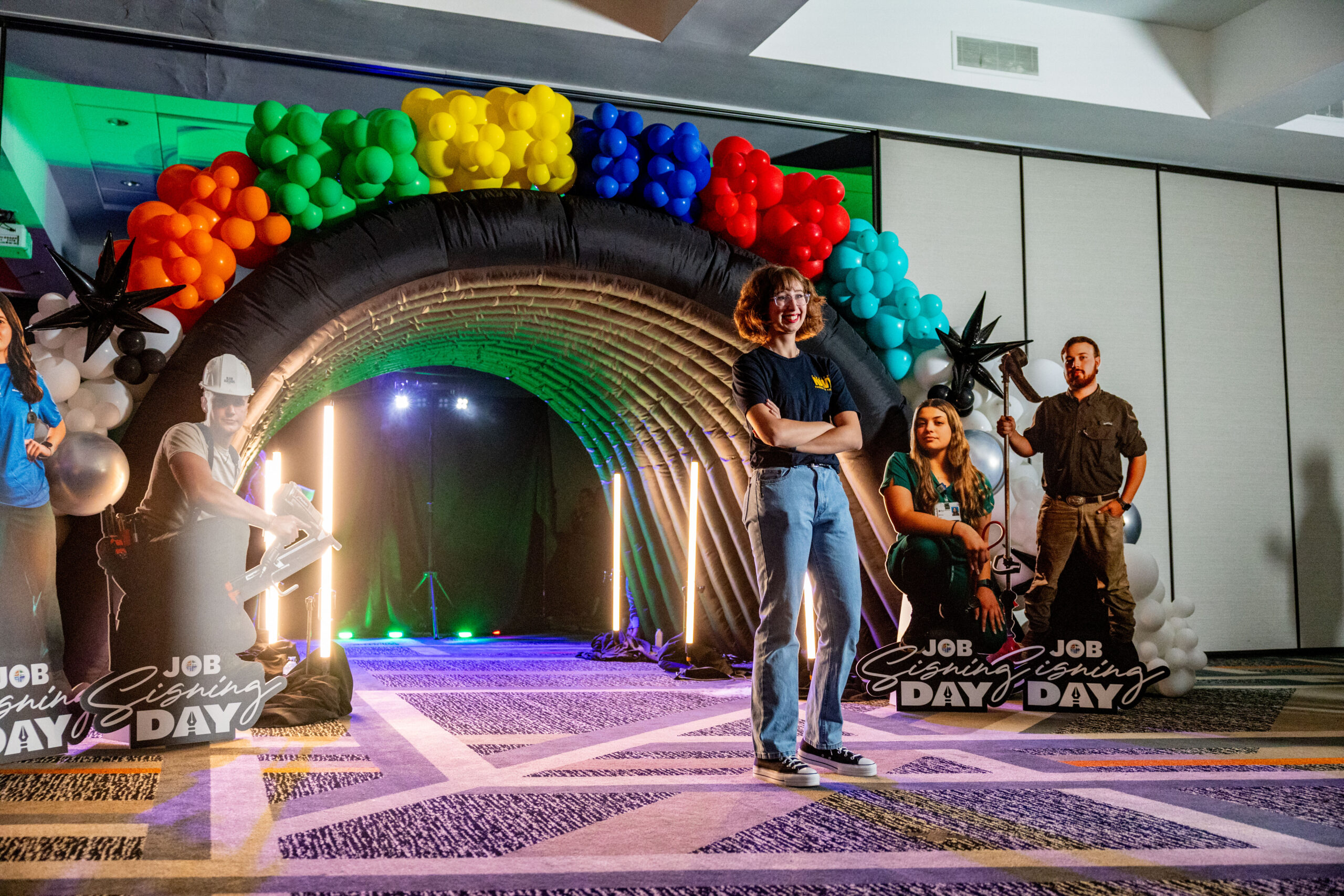
Alex Schroetke walks through the tunnel during Blount County Job Signing Day

More than 60 students from area high schools took part in the sixth annual Blount County Job Signing Day activities at the Airport Hilton as they inked with 29 local employers to begin their careers.

These seniors either took career and technical education (CTE) courses on a career pathway, earned an industry certification in school, or participated in work-based Learning (WBL).

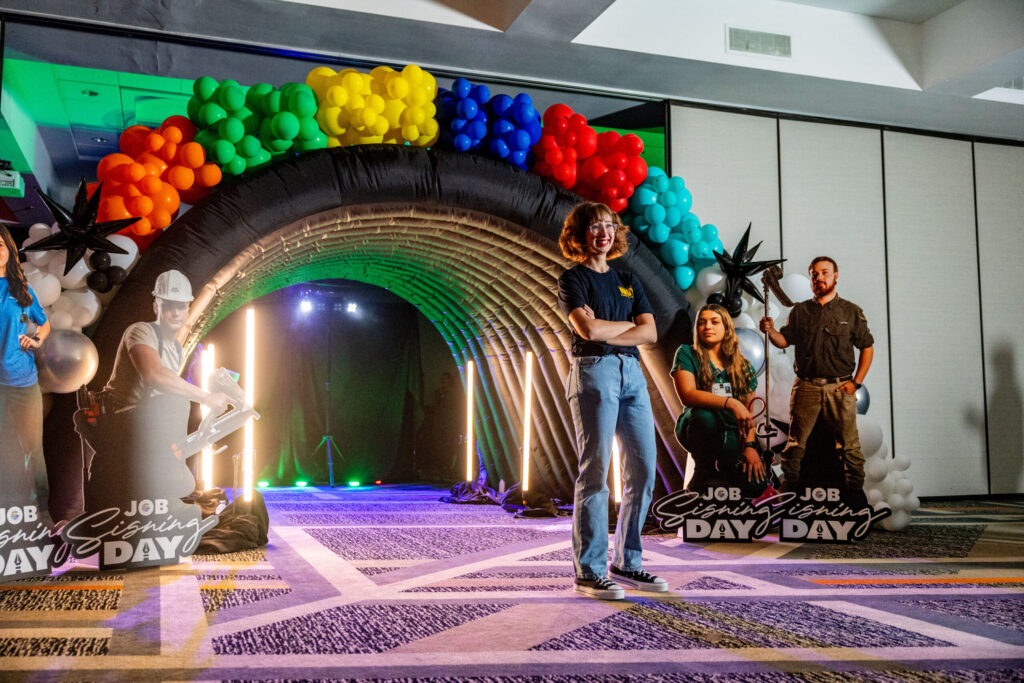
Alex Schroetke walks through the tunnel during Blount County Job Signing Day

“This event dispels the misperception that every student needs to go to a four-year university for a good job,” said Blount County Mayor Ed Mitchell. “These students have excelled in the classroom and in the work environment while in high school and are launching their full-time careers right now. We need to continue to promote the fact that there are many different pathways to highly skilled, high-paying jobs. It also represents the notion that we have the best rising workforce in our community, and we want to keep our young people right here in our community.”

Students are taking positions in welding, media production, construction, nursing, cosmetology, advanced manufacturing, electrical apprenticeships, and more.

Some of the companies offering these students positions are DENSO, Blackberry Farm, Danny Davis Electrical, Blount Memorial Hospital, Cherokee Millwright, ICC International, TVA, RIX, Roger L. Newman, Massey Electric, Murphy Bobcat, Harrison Construction, Haven Media, Axis Fabrication and Machine Co., and Garner’s Automotive.

Presented by the Blount Partnership, signing day promotes the notion that although every student’s path may be different, and sometimes nontraditional, there are opportunities for meaningful careers in Blount County. It also celebrates the fact that there are multiple opportunities for high school students to explore and begin preparing for careers. Some students are going on to start their careers full-time, some are going to continue a combination of school and work, and some are going to work now with the plan of starting school later.

“We have worked with educators, businesses and the community to change the perceptions of certain careers that were labeled as dirty and dangerous with low pay,” said Blount Partnership Director of Communications Jeff Muir. “We have managed to show students these jobs can be high-tech, safe, high-paying careers. We are seeing that work come to fruition as the mentality is really changing and career and technical education is being valued.”

Blount Co. Receives $1.6 million to Improve Broadband

Tennessee Gov. Bill Lee and Department of Economic and Community Development (TNECD) Commissioner Stuart C. McWhorter announced the state will award $162.7 million in broadband and digital opportunity grants.

In total, these investments will provide broadband access and digital opportunity programs to more than 236,000 Tennesseans across 92 counties.

“Broadband is essential to all Tennesseans, and that’s why we are making strategic investments in our state’s broadband infrastructure and digital opportunity programs to create a pathway to education, job training and greater opportunity statewide,” said Gov. Lee. “I thank the Financial Stimulus Accountability Group for their continued support and management of these broadband dollars.”

With today’s announcement, TNECD has invested more than $715 million to expand the state’s broadband infrastructure, connecting more than 689,000 Tennesseans across 275,000 residential and business locations.

“More than $715 million has been invested to expand broadband under Governor Lee’s administration, and we are excited to announce additional funding today that will ensure
Tennesseans have access to and benefit from high-speed internet, which opens the door to high-quality job training,” said Commissioner McWhorter.

Today, a total of $97.2 million is being funded by the Last Mile and Middle Mile infrastructure programs, and $65.5 million will be invested in digital opportunity programs. These initiatives are part of a broader strategy to ensure that all residents have access to high-speed internet by 2028, and have opportunities to develop digital skills, access high-quality tech jobs, connect to broadband enabled devices and access online learning and telehealth resources.

TNECD’s investment of $97.2 million in broadband infrastructure will provide access to more than 58,200 Tennesseans across 23,000 locations in 37 counties.

To promote broadband opportunity and high-paying digital jobs, TNECD launched four new programs during this funding opportunity: Digital Skills, Employment and Workforce
Development (DSEW), Connected Community Facilities (CCF), Broadband Ready Communities (BRC) and Tennessee College of Applied Technology (TCAT) Broadband Workforce grants.

The DSEW grants, totaling $27.9 million, will be distributed among 47 organizations that will offer a variety of training and education programs to advance digital skills and workforce development, creating a pipeline for well-paying digital jobs.

The CCF grants, totaling $26.5 million, will be distributed among 19 local governments and will facilitate digital opportunity by construction and renovation of spaces that offer services for digital advancement in workforce, healthcare, and education.

The BRC grants, totaling $6 million, will be distributed among 64 local governments and support community-based digital skills training, public Wi-Fi projects, distribution of free or low-cost devices and marketing for low-cost internet plans.

The TCAT Broadband Workforce grants, totaling $4.9 million, will be distributed among five TCATs that will offer a Telecommunications Electronics Technician diploma. The objective of the program will be to produce a well-trained and diverse telecommunications workforce capable of deploying and managing broadband infrastructure.

Grantees across all programs are investing approximately $48 million in matching funds and will complete their projects by December 31, 2026.

Below is a list of the recipients for the latest round of funding:

  1. Spectrum Southeast
    $291,729.98 – Serving parts of Blount County
  2. Blount County
    $100,000.00
  3. Maryville College
    $776,814.00 – Serving parts of Blount County
  4. University of Tennessee
    $512,916.00 – Serving parts of Knox, Anderson, Blount, Bradley, Campbell, Cocke,
    Cumberland, Grainger, Hamblen, Jefferson, Knox, Loudon, McMinn, Meigs, Monroe,
    Morgan, Rhea, Roane, Scott, Sevier and Union Counties

University of Tennessee launches College of Emerging and Collaborative Studies

The University of Tennessee, Knoxville (UTK) creates a talent pipeline for local companies, and for years it has been sustainable. However, things started to shift once artificial intelligence (AI) and machine learning hit the workplace. Now, everything is changing, and the skills of emerging young professionals need to change, too.

According to the Technology Skills Gap survey by the Knoxville Chamber and the Knoxville Technology Council, local businesses want to hire people with AI skills and would be willing to pay them more. Young professionals cite a lack of good-paying jobs in the city, and according to the 2023 Career Outcomes Report generated by UTK, the median salary for a graduating student is $56,384.

Enter UTK’s new College of Emerging and Collaborative Studies (CECS), created to train students to be innovative, technology-forward thinkers in any field or industry they enter. The new college will produce competitive applicants with relevant, timely skills that businesses are looking for and provide students with the higher salary positions they seek.

Read entire article from Teknovation.biz

Pellissippi State commits to recruiting more students to advanced manufacturing 

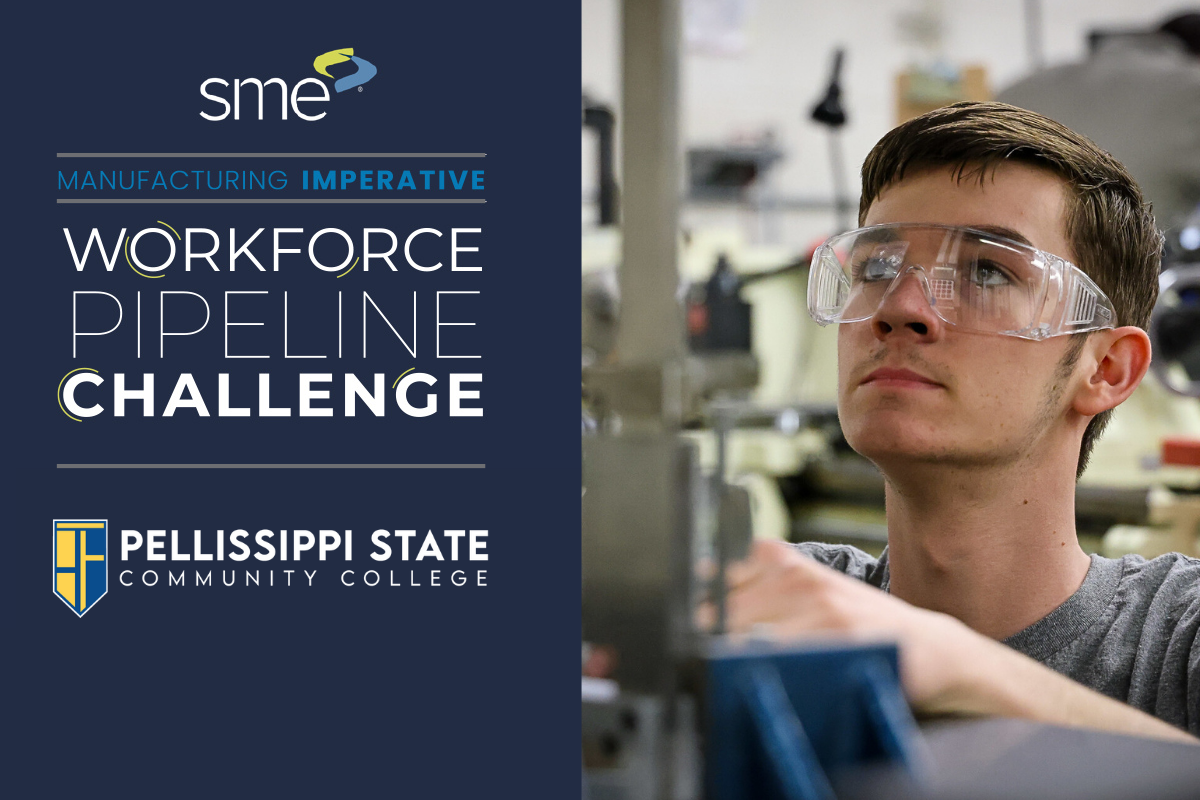
Pellissippi State Community College kicked off a three-year challenge Wednesday to attract and recruit 1,000 students into advanced manufacturing and connect them with industry partners. 

More than 30 representatives from local manufacturing companies, K-12 school systems, chambers of commerce and the college were on hand to learn more about the SME (Society of Manufacturing Engineers) Manufacturing Imperative – Workforce Pipeline Challenge.  

Pellissippi State President L. Anthony Wise Jr. said the partnership aligns with the college’s roots as a technical institute. 

“We are committed to building the next generation of manufacturing professionals,” Wise said. “The sustainability of the industry depends on the development of the talent pipeline.” 

The alliance between Pellissippi State and SME is designed to build awareness of careers in manufacturing and accelerate the education and skill development needed to place Tennessee students in jobs making family-sustaining wages. 

The challenge comes as the manufacturing industry faces an estimated 2.7 million unfilled jobs by 2030. Together with SME, Pellissippi State will work to develop strategies that will strengthen the manufacturing workforce in East Tennessee. 

Pellissippi State is one of only 25 schools in the country invited to participate in the challenge with each college tasked with attracting 1,000 students into manufacturing jobs over the next three years. 

For more information on Pellissippi State’s partnership with SME and the Workforce Pipeline Challenge, or to learn more about opportunities to engage with and support the program, contact Patty Weaver, vice president of external affairs for Pellissippi State, at [email protected]

SkyNano Technologies Opens 20,000-square-foot facility i

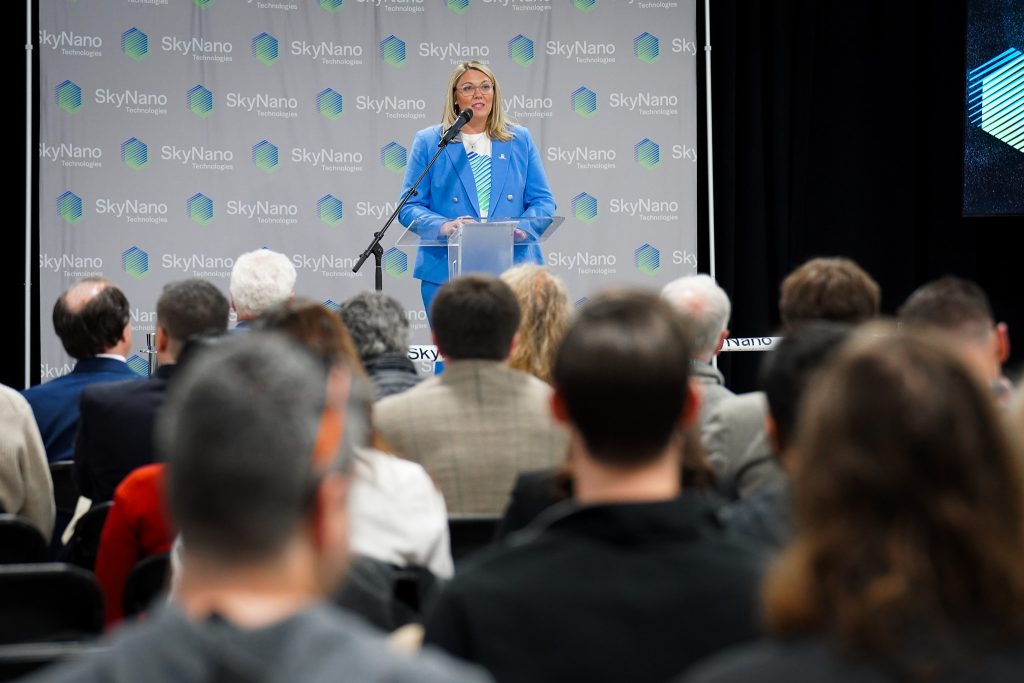
SkyNano is an East Tennessee deep tech start-up success story; one that the Co-Founder, Anna Douglas has been writing for seven years. On Tuesday morning, Douglas, alongside dozens of community members and partners, celebrated the ribbon cutting for SkyNano’s new 20,000-square-foot facility in Louisville, Tennessee.

SkyNano brings to market new, cutting-edge technology that helps with global decarbonization efforts. For the last several years, Douglas has been developing and expanding novel electrochemical manufacturing technology for the capture and conversion of CO2 into carbon-based materials, primarily carbon nanotubes.

Her revolutionary concept captured the attention of the Oak Ridge National Laboratory in 2017, around the time Tom Rogers spearheaded the launch of the Innovation Crossroads program. Through the support of the U.S. Department of Energy, Douglas joined the first cohort of the post-doctoral entrepreneurship program. It was ultimately the influence of that program, community connections, and a robust support system that convinced her to plant her research, and new facility in East Tennessee.

Read complete story at Teknovation.biz

TNECD Celebrates Tennessee’s Skilled Workforce with Release of “Born to Make”

The Tennessee Department of Economic and Community Development (TNECD) released its newest anthem video, “Born to Make,” in conjunction with February serving as National Career and Technical Education (CTE) Month in Tennessee.

CTE gives students and adults the academic skills, knowledge and training necessary to succeed in future careers while also building upon skills to prepare them for a wide range of jobs in high demand. While CTE is taught to school-aged students in middle and high school, it is also offered to adult students at postsecondary institutions in an effort to give more Tennesseans the skills they need to obtain careers across a variety of industries.

Gov. Bill Lee issued a proclamation asking Tennesseans to join him in celebrating February 2024 as Career and Technical Education Month and highlighting how CTE gives Tennessee students opportunities to advance their education and training in order to better position them for future success while also strengthening Tennessee’s workforce pipeline.

“The pathway to success doesn’t look the same for every Tennessean and while attending a four-year institution may be the right option for some, a certification from one of our Tennessee Colleges of Applied Technology may be right for others,” said Gov. Lee, “We have prioritized career readiness so that more Tennesseans are given the opportunity to follow the career path of their choosing.”

“Born to Make” focuses on the Tennesseans that create products known around the world from here in the Volunteer State. From cars and boats to whiskey and chocolate to chart-topping songs and motion pictures, “Born to Make” celebrates Tennessee’s workforce across a number of industries.

“The strength of Tennessee’s brand wouldn’t be what it is if it weren’t for the men and women who contribute to exceptional products that are made in our state,” said TNECD Commissioner Stuart C. McWhorter. “In ‘Born to Make,’ we recognize and applaud the skilled individuals that dedicate their talents to the success of Tennessee’s businesses and the reputation we are known for around the globe.”

Watch “Born to Make” here and follow TNECD on social media to see highlights of the businesses and workforce that shape Tennessee.

Pellissippi State now can certify Haas machine operators

Pellissippi State Community College is now one of only two higher education institutions nationwide that can provide in-person assessments for those seeking Haas certification as a Basic Mill Operator, according to a Haas representative.

Haas Automation is the largest machine tool builder in the United States and one of the largest builders of CNC machines in the world. CNC stands for computer numerical control, and these machines play an important role in the manufacturing industry.

“The regional need for CNC machine operators has grown significantly,” said Andy Polnicki, director of Pellissippi State’s MegaLab. “This training and certification provide an opportunity for people in our region to be prepared to enter this field or get the promotion they are seeking.”

Four high school students from Knox and Blount counties became the first to become Haas certified at Pellissippi State on June 8.

The Haas Certification Program was developed after many discussions with Haas customers regarding their struggles with finding machine operators, according to Haas. Haas Automation listened to the customers’ issues and decided to help address the labor shortage issue by creating an online curriculum, after which students must pass an in-person, hands-on test.

“Haas is aware that watching a dozen or so videos will not make a student a machinist,” according to Haas materials. “However, we do believe that the videos and the course curriculum that we have created will give students the necessary skills and understanding to successfully become a Basic CNC Operator. Students will also gain exposure to some of the basics of machining that might otherwise take many months on the job.”

Previously, those who completed the Haas Certification online curriculum had to take their in-person, hands-on test at a Haas factory outlet. Pellissippi State offering these assessments helps alleviate scheduling conflicts at the Knoxville Haas location.

“After completion of the online curriculum, the students can schedule a time to come to Pellissippi State’s Hardin Valley or Strawberry Plains campus and participate in a hands-on practical test,” Polnicki explained. “A passing grade on the hands-on practical test will yield a Haas Certificate Diploma.”

While Pellissippi State is starting by offering the assessment for Haas Basic Mill Operator, the college’s intention is to eventually offer a series of Haas certification programs, Polnicki added.

“Employers are seeking specific skill sets, and specialized certifications such as these can often provide job applicants with an edge over other applicants,” said Susan Webb-Curtis, Pellissippi State’s new executive director for Workforce and Community Development. “The Haas certification verifies that these candidates have completed training and have been able to demonstrate the entry-level skills needed to safely and efficiently operate basic milling machinery. Being able to offer hands-on assessments for the Haas Basic Mill Operator certification is a valuable service that Pellissippi State can now offer through our Haas certified instructors.”

Those interested in learning more about this opportunity should contact Andy Polnicki at [email protected].