



Category: Uncategorized

Manufacturing process produces better, cheaper cathodes for lithium-ion batteries

Courtesy of Oak Ridge National Laboratory

Researchers at the Department of Energy’s Oak Ridge National Laboratory have developed a new method for producing a key component of lithium-ion batteries. The result is a more affordable battery from a faster, less wasteful process that uses less toxic material.

Lithium-ion batteries — used in products from appliances to cell phones, as well as in most electric vehicles — are composed of a cathode and an anode with an electrolyte in between. Ions move from anode to cathode through the electrolyte in a reaction that converts chemical energy to electrical energy.

The drive toward decarbonization and the demand for electric cars has increased the focus on sustainably producing energy-dense cathodes. However, traditional processing presents challenges.

The first obstacle is a reliance on cobalt, a rare metal mined and refined abroad. This dependence on foreign sources poses risks to American manufacturing supply chains and transportation infrastructure.

The availability of cobalt is not the only complication. The balance of other metals common in cathodes can also make the manufacturing process longer and more hazardous. For example, high nickel concentration has led to the widespread use of a chemical mixing method for cathode production that requires large quantities of ammonia for corrosive reactions. Using the toxic chemical increases costs, heightens health and environmental concerns, and wastes large amounts of water to reduce acidity.

ORNL researchers report in the Journal of Power Sources that they have developed a cleaner, cheaper, more efficient method for making a new class of high-capacity cathode material without cobalt. Instead of continuously stirring cathode materials with chemicals in a reactor, their hydrothermal synthesis approach crystalizes the cathode using metals dissolved in ethanol. The ethanol is safer to store and handle than ammonia, and afterward it can be distilled and reused.

“This novel process offers the key advantage of moving the cathode industry to cleaner and more cost-competitive production while putting less burden on our environment,” said ORNL’s Ilias Belharouak, the principal investigator for the project.  

The hydrothermal synthesis method is also much faster, said ORNL lead researcher Rachid Essehli. The time required to make particles and prepare for the next cathode batch drops from as many as a few days to 12 hours.

In addition, the material produced has more uniform, round, tightly packed particles that are ideal for a cathode, Essehli said. Although the ORNL team has previously identified other cobalt-free combinations that work, the material developed through this study was better at maintaining stability throughout the battery charge cycle.

Because its properties are similar to those of today’s cobalt-based cathodes, the new material can be seamlessly integrated into existing battery manufacturing processes. A patent is pending on the technology, which is ready to be scaled up for commercial production by industry, Essehli said. “This cathode material can give more energy and decrease the cost of electric car batteries,” he said.

The research was funded by the DOE Office of Energy Efficiency and Renewable Energy’s Vehicle Technologies Office. It used resources of ORNL’s Center for Nanophase Materials Sciences and the Advanced Photon Source at Argonne National Laboratory. Both are DOE Office of Science user facilities.

UT-Battelle manages Oak Ridge National Laboratory for the U.S. Department of Energy’s Office of Science. The single largest supporter of basic research in the physical sciences in the United States, the Office of Science is working to address some of the most pressing challenges of our time. For more information, please visit https://energy.gov/science.

Blount Partnership’s Emert Selected for Leadership Tennessee

Leadership Tennessee announced that Blount Partnership Director of Economic Development Lauren Emert was selected to its Spring 2023 Leadership Tennessee NEXT cohort, a program offering Tennessee’s early and mid-career professionals personal and professional development while fostering a greater understanding of Tennessee and its assets. This class is the sixth cohort to complete the program.

“I am extremely honored to be part of this class and look forward to meeting and learning from professionals from across the state,” said Emert. “There is a great mixture of people from all different sectors and I’m anxious to view difference perspectives on how we can tackle issues that affect not only our region but also the state.”

Leadership Tennessee NEXT is welcoming a class of 29 rising professionals who represent the diversity of the regions and industries of the state. The class will meet four times during the program year, conducting sessions in Pickwick Landing, Knoxville, Memphis and Nashville. Over the course of the program, participants will grow their professional skills and build an activated network of rising leaders spanning the state, while learning about significant issues facing the state.

“Leadership Tennessee NEXT continues to offer opportunities for the state’s strongest and brightest rising leaders to engage in meaningful dialogue and development that will benefit Tennessee both now and in the future,” remarked Leadership Tennessee President & CEO, Alfred Degrafinreid II. “Class VI is met with a strong network of past LT NEXT members who are already impacting their communities and the state significantly. We are excited to welcome the newest cohort.”

Going into its 10th year, Leadership Tennessee has developed a network of over 500 members from both Leadership Tennessee NEXT and the organization’s longest initiative, its Signature Program, designed for those in the highest levels of organizational and community leadership across the state.

Leadership Tennessee fosters collaborative, non-partisan dialogue on issues of statewide importance by crossing geographic and professional boundaries and connecting a diverse network of problem solvers and engaged citizens.

To learn more about Leadership Tennessee, visit www.leadershiptennessee.org.

Arconic Foundation helps high schoolers take Pellissippi State dual enrollment courses

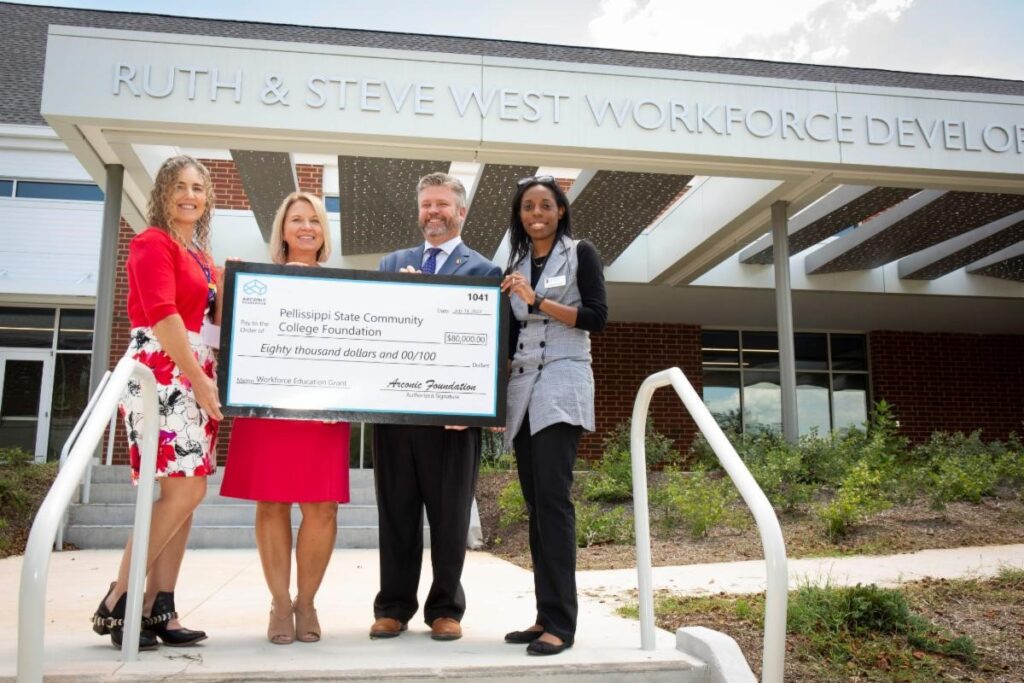
Arconic Foundation has awarded Pellissippi State Community College $80,000 to help Blount County juniors and seniors explore advanced manufacturing careers while still in high school. 

Christy Newman of Arconic Tennessee Operations, second from left, presents a $80,000 grant from the Arconic Foundation to Pellissippi State to support new Career and Technical Education dual enrollment opportunities for high school juniors and seniors in Alcoa, Maryville and Blount County. From left are Associate Professor Kristi Leach, program coordinator for Electrical Engineering Technology, Newman, Pellissippi State President L. Anthony Wise Jr. and Blount County Campus Dean Priscilla Duenkel.

The Pellissippi State Credit to Credentials pilot project includes Career and Technical Education dual enrollment opportunities for students in 11th and 12th grades at Alcoa, Blount County, Maryville and other area high schools. Dual enrollment is a way for high school juniors and seniors to earn college and high school credit for the same course simultaneously, giving them a head start on college and helping them save money in the process. 

As part of the Arconic Foundation-funded pilot, Pellissippi State will offer in spring 2023 a series of cohort-based Electrical Engineering Technology classes for high school students on the college’s Blount County Campus. Cohorts allow students to progress through academic programming as a group – in this case, taking classes Mondays through Thursdays with open lab time and academic support provided for them on Fridays. 

“This pilot project addresses some of the most common barriers to dual enrollment participation, providing funds for tuition, fees, books and other course materials for up to four courses per participant, per semester,” explained Pellissippi State President L. Anthony Wise Jr. 

Classes will be taught in Pellissippi State’s new Ruth and Steve West Workforce Development Center. 

“This program is a great example of how the new Ruth and Steve West Workforce Development Center at Pellissippi State is benefiting the community,” said Ryan Kish, Arconic Foundation president and treasurer. “The additional capacity and capability at the campus provides students with more opportunities to explore new courses and find a rewarding career path that works for them.” 

The Credit to Credentials courses the college is offering will allow students to acquire certificates in Electronics Technology and Industrial Automation. While certificates are awarded for short-term training, the dual enrollment courses also count as credits toward Pellissippi State’s Associate of Applied Science in Electrical Engineering Technology. 

“We are delighted to provide students a pathway to begin their college coursework while still in high school,” said Vice President for Academic Affairs Kellie Toon. “This opportunity will allow them a jumpstart to prepare for high-demand, high-wage jobs in the community.” 

Enrollment for spring dual enrollment courses opened Oct. 19. Those interested in the pilot program should contact Margaret Ann Jeffries, dean for Engineering and Media Technologies, at 865.694.6483 or [email protected] for more information. 

EPA grant to fund Maryville College environmental sustainability boxes

Area elementary and intermediate schools will soon be the recipients of Maryville College gift boxes, courtesy of a recent grant awarded to the institution by the Environmental Protection Agency.

The $100,000 grant was awarded in September and will allow MC students to create “Out of the Box Community Sustainability” packages that will be provided to fourth-graders in select East Tennessee schools.

“In a nutshell, we’ll be providing them with a series of boxes, each of them centered around environmental education and regionally connected to our area and Appalachia as a way to educate them about environmental issues,” said Adrienne Schwarte, a professor of Design and the coordinator of the Sustainability Studies minor at Maryville College.

“We wanted these ideas to be fun and educational for students, and it’s really important that the things in them are turnkey, so that when a teacher would like to add in an environmental education activity to enrich the class, they’re ready to go, straight out of the box,” she added. “It’s meant to be able to serve as an additional support mechanism for instructors, particularly around environmental education.”

The idea, Schwarte said, came from a class that she and Dr. Mark O’Gorman, a professor of Political Science and coordinator of the College’s Environmental Studies program, team teach each spring semester. In their Introduction to Environmental Issues and Foundations of Sustainability course (ENV/SUS 101) they were looking to integrate a project or assignment into the class that would allow the students to activate classroom environmental and sustainability knowledge in a more tactile and interactive way.

“We talk a lot about being change agents, and how they can be change agents around issues for the environment,” Schwarte said. “For our last project in the class, rather than having a more static individual, written assignment, we started off by having students come up with short little charettes/activities they could put together to educate others about an issue related to the environment.

“That first year, students got into groups, came up with concepts and ideas and had to write a proposal. We had some small community engagement grant funding each year to support those activities, so we bought the materials, and our very first year, we did these boxes as an activity on campus.”

The boxes run the gamut, Schwarte added, and include specific, concrete ways in which students can use the contents to make an environmental difference. One box, for example, contained all the materials along with instructions for making soap in a safe, effective and sustainable way.

“It’s about addressing the challenges of environmental problems, and although there are a lot of new technology materials used to tackle environmental problems, it’s also about implementing ideas that have existed for many decades, including no-tech and simple ways from Appalachia that can be sustainable,” Schwarte said. “There are lots of skills and knowledge around environmental efficiency and conservation we can bring back or at least make sure that shared knowledge is available for everybody, so they can be thinking of those things as well.”

That first year, Maryville College faculty and students provided environmental education to students at Clayton-Bradley Academy in Maryville; the success led to reaching out to a second school during year two, and it became an annual project among the Sustainability Studies and Environmental Studies students.

“The students enjoyed it, and they learned something about the process because it made them feel stronger as change agents in their community,” Schwarte said. “When the opportunity for the grant came into play, we thought it was a really good opportunity to expand the program and offer it to more schools.”

To expand the “Out of the Box Community Sustainability” project, Maryville College will partner with Keep Blount Beautiful, Schwarte said, to generate and distribute the boxes to regional public schools, “targeting economically distressed and underserved communities in Blount and Loudon counties,” according to the grant application.

“These stand-alone environmental education units, created with materials and curricula to encourage critical thinking, will focus on issues specific to East Tennessee, such as air, water, and soil quality, ecosystem health management, food security, and climate change,” the application goes on to state. “The project will reach 960 fourth-grade students in East Tennessee and the Appalachian region … by designing and building portable, sustainable, and reusable environmental learning units, this project will inspire and motivate youth and community members to become active stewards of East Tennessee’s unique natural resources as well as increase the number of K-12 classrooms teaching environmental education and meeting the Tennessee Environmental Literacy Plan.”

The grant will provide funding for the project through 2024, Schwarte added, and organizers have a target date to begin distributing boxes in January, with another drop in April and in the fall and spring of the 2023-24 academic year. Schwarte and O’Gorman recently sent out a campus-wide notice seeking four MC students to serve as paid interns to carry out the project, which will give them experience in working with both local classrooms and an area nonprofit.

And, she added, the development of a hands-on learning tool that promotes active engagement will help both the Scots assembling the boxes, and the students who will be their recipients.

“That active engagement is so important in putting together the boxes, be it a demonstration of how something works so students can see that through physical, visual, real-time engagement in the process to game-based activities that students have designed,” Schwarte said. “A lot of these are just sort of the reminder of the importance of everyday activities we can do to reduce our emissions and have a positive impact on the environment. With sustainability, we must continue to teach that we all share the planet, and when we take these measures, we all win. That’s what’s so great about all of this.”

DENSO Breaks Ground on Solar Facility

DENSO, a leading mobility supplier, and Silicon Ranch, one of the nation’s largest independent power producers, today broke ground on a new solar facility at DENSO’s Maryville, Tennessee, location, along with the City of Maryville Electric Department and Tennessee Valley Authority (TVA).

DENSO logo

The new solar farm is the first of four solar production facilities the group plans to bring online in Tennessee. Harnessing solar power helps DENSO advance its Two Great Causes: Green—achieving carbon neutrality by 2035—and Peace of Mind—creating a safe and seamless world for all; strengthen its involvement in the U.S. Department of Energy’s Better Plants program; and bolster broader efforts to reduce the environmental impact of its manufacturing operations and energy use.

When the solar projects are completed and coupled with additional energy conservation initiatives, 100 percent of electrical needs for DENSO’s Maryville facility will be sourced from renewable energy. This will help the Maryville location, which is a manufacturing hub for DENSO electrification and safety systems, support greater sustainability locally through its operations and across North America with its products.

The event included a tour of DENSO’s Maryville campus, followed by remarks from representatives of each partner that made the solar facility possible, including:

  • Shinichi Nakamizo: President of DENSO’s Maryville Facility and a Senior Director of DENSO Corporation
  • Andy White: Mayor of Maryville
  • Matt Kisber: Co-Founder and Chairman at Silicon Ranch
  • Carol Eimers: Regional Vice President for the East Region at TVA

“Our mission is to contribute to a better world, and as part of that, we’re committed to reducing CO2 emissions, not only through our products, but also in our operations and processes,” said Shinichi Nakamizo, president of DENSO’s Maryville facility and a Senior Director of DENSO Corporation. “We’re grateful to Maryville Electric, Silicon Ranch and TVA for helping us turn our commitment into action. We also thank our Maryville team, whose leadership is instrumental in this project and helps advance local communities toward a clean energy future.”

Through collaboration with the City of Maryville Electric Department and Silicon Ranch, DENSO will access a portion of the total 10.5 megawatts of solar energy produced under TVA’s Generation Flexibility program, starting with the facility located on DENSO’s Maryville campus. The TVA program enables participating local power companies (LPCs) to generate up to 5% of their total energy load to meet the renewable energy goals of their customers, attract sustainability-focused businesses to their communities, and solve individual challenges for their distribution systems.

“TVA has been bringing renewable energy to the Valley for over 20 years, and this partnership using TVA Green programs expands the reach that our Green Renewable Solutions have on local communities across our region,” said Doug Perry, TVA Senior Vice President of Commercial Energy Solutions. “With a shared mission in mind, this solar project with Silicon Ranch and the others to follow will not only help us meet our own sustainability goals but those of our LPCs and their customers as well.”

“These solar farms are an incredible opportunity for us to bring renewable energy to our community from a trusted source,” said Baron Swafford, City of Maryville Public Utilities Director. “TVA’s Generation Flexibility Program allows us to combine the unique offerings of DENSO and Silicon Ranch to develop a sustainable power source for our communities and those around us in the foothills of the Smoky Mountains.”

“Part of what makes these solar facilities so special is that every partner involved shares a commitment to the success of this community and the surrounding region,” said Matt Kisber, Silicon Ranch Co-Founder and Chairman. “Silicon Ranch takes great pride in our Tennessee roots, and our colleague who led our development work here is a Maryville native whose family has been here for seven generations. Each step in the process of bringing these solar farms to life is another proof-point for what is possible when people genuinely care about delivering positive outcomes for the communities we serve.”

The groundbreaking comes after DENSO installed EV chargers this spring at its Maryville facility, a move that enables employees to charge their battery electric and hybrid electric vehicles while at work. DENSO is committed to continuously innovating to protect the environment and society.

LDA Engineering celebrates 40 years with $500,000 commitment to STEM education

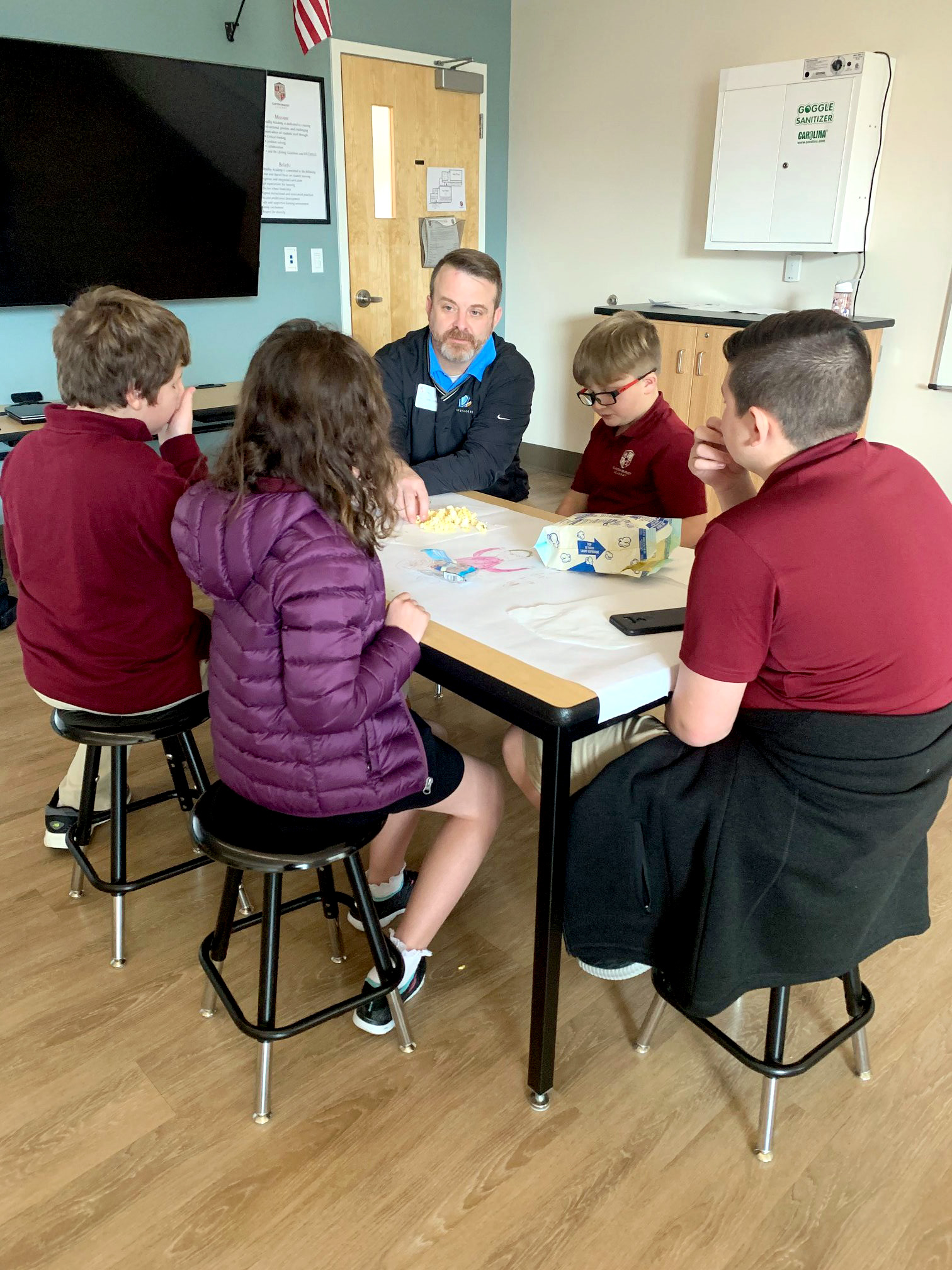
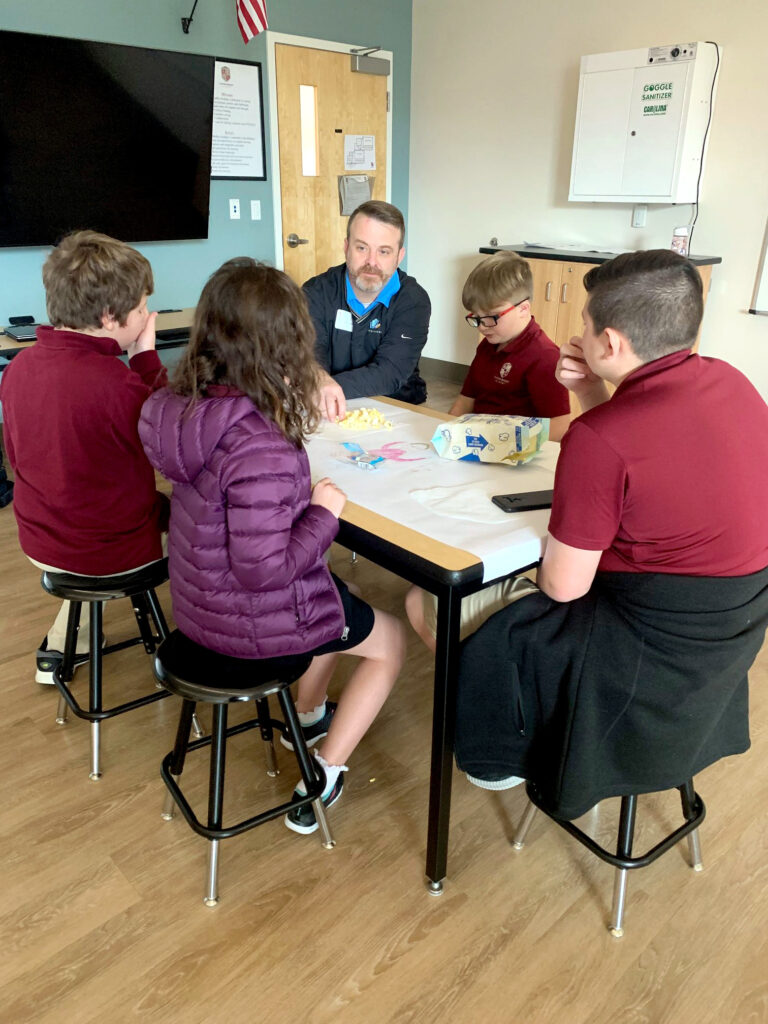
Jason Brooks works with Clayton-Bradley Academy students.

In celebration of its 40th anniversary, LDA Engineering has made a $500,000 renewed commitment to science, technology, engineering and mathematics (STEM) education and also has dedicated $120,000 in college scholarship funds.

Jason Brooks works with Clayton-Bradley Academy students.

The company has invested in STEM and additional engineering education and outreach in all of its markets, and in 2015 pledged to reach $250,000 in 10 years. This year, the team reached that level in donations, pro bono work and volunteer hours and decided to celebrate 40 successful years by doubling the commitment. LDA Engineering’s new goal is to reach $500,000 in contributions by 2030.

“STEM professions like engineering are a cornerstone of the economy, and young people are the future of our profession,” said Jason Brooks, CEO of LDA Engineering. “Through support of nonprofits and educational groups in our markets in Knoxville, Chattanooga, Tri-Cities, Nashville and Memphis, we’re blessed to share our passion for engineering with students at a young age to open their minds to the possibilities.

“I became even more driven to encourage the next generation of engineers when my daughter, Mary-James, and son, Hall, came along. Women still only account for 27% of the engineering workforce, and I believe that early exposure and encouragement in STEM subjects will make a difference in people choosing engineering as their calling.”

LDA Engineering also announced three scholarships to promote engineering education, totaling $120,000. The University of Tennessee Knoxville, Tennessee Tech University and Maryville College each will receive $40,000. The Tennessee Tech scholarship was dedicated to longtime employee and company partner Steve Bostic.

The current number of engineering professionals would need to grow by at least 15% to replace baby boomers aging out of the market, according to a 2021 report by the U.S. Bureau of Labor Statistics.

LDA Engineering aims to address that gap by partnering with organizations such as STEM Scouts of the Great Smoky Mountain Council, Boy Scouts of America; Future City Competition, Tennessee region; United Way of Blount County; and Adventure Science Center.    

The firm estimated that more than 3,500 students have been impacted by LDA’s efforts so far.

“We want to say thank you to our clients for their belief in us, driving our recent growth and allowing us to give back to the next generation of STEM industry professionals,” Brooks said. “Every one of our 40 years is a testament to the support of the communities that LDA Engineering serves.”

For more information about LDA Engineering’s 40th anniversary celebrations and community involvement, follow the firm on social media at @LDAEngineering or visit ldaengineering.com/updates.

Blount County Achieves ThreeStar Community Development Certification

Representatives from the Blount Partnership in Blount County recently attended the Tennessee Department of Economic and Community Development’s 2022 Governor’s Conference in Nashville. During the event, attendees heard from Governor Bill Lee and TNECD Commissioner Stuart McWhorter, as well as CBS Sports Lead Play-by-Play Announcer Jim Nantz and a host of other speakers who discussed topics ranging from entrepreneurship to workforce to foreign direct investment and the programs that help build strong communities throughout the state.

ThreeStar Community Development Certification efforts were recognized with county representatives, along with Commissioner McWhorter and TNECD Community Development Director Jody Sliger. ThreeStar serves to promote economic and community prosperity through collaboration to positively impact every Tennessean.

Pictured L-R: TNECD business development consultant Michelle Scarbrough, TNECD business development consultant Crystal Bryant, Blount Partnership economic development assistant Jennifer Wilson, TNECD Commissioner Stuart McWhorter, Blount Partnership economic development director Lauren Emert, TNECD East Tennessee regional director Gary Human, TNECD community development director Jody Sliger.

East Tennessee is an aviation ‘hub’

Article courtesy of WBIR-TV.

ALCOA, Tenn. — One of the largest general aviation companies in the world runs its customer-facing operations out of McGhee Tyson Airport.

Cirrus Aircraft makes its airplanes in Duluth, Minnesota, but when customers are ready to pick the aircraft up, they have to come to Knoxville, Tennessee. 

“We invite our clients to experience the Cirrus Life and East Tennessee natural beauty and culture,” said Todd Simmons, the President of Customer Experience at Cirrus, in an emailed statement. 

Jeff Smith is the Vice Chair of the Metropolitan Knoxville Airport Authority Board of Commissioners and an aviation enthusiast. Smith said the customers that Cirrus brings in significantly affect the economy. 

Smith said Cirrus’s customers generally spend between three and five days in East Tennessee while they take delivery of their aircraft. 

Cirrus said it estimates its customers spend a total of more than 4,000 nights in East Tennessee hotels.

Read the rest of the story at WBIR.com.

Why Relocate to Blount County, TN?

Find out what swayed a major manufacturer to choose this hidden gem nestled near the Smoky Mountains.

Employees at Smith & Wesson’s new campus in Maryville will have unobstructed views of the Smoky Mountains, but there’s a long list of additional advantages that come with the job.

They include all the benefits of Blount County’s standout quality of life, great schools, unlimited outdoor recreation and a low cost of living in a family-friendly community.

“Blount County has the nation’s most visited national park, the Great Smoky Mountains National Park, in its backyard. More than 14.1 million visitors trekked into the park in 2021. It has become a year-round destination for visitors from all over the world,” says Bryan Daniels, president and CEO of the Blount Partnership.

Read the complete article at Livability.

AESSEAL Announces $10 million orders for Machine Sentry

AESSEAL partner company, the reliability consultants AVT Reliability Limited® (AVTR), is pleased to announce the receipt of almost $10 million of new orders globally for its Cloud/Internet of Things and Remote Data Centre (RDC) business, collectively branded as Machine Sentry.

This technology allows reliability engineers to collect and monitor data on the health of factory machinery all over the world, in order to ensure reliable performance, avoiding breakdowns and potential environmental accidents. 

The largest contract is for the remote collection and analysis of data on off-shore platforms.  Other significant wins have been in the USA in Pulp and Paper, a UK based water authority and a 24 plant global roll-out in the cement industry.

A recent installation in Togo, Africa at a facility that had never previously engaged in Condition Monitoring demonstrated how quickly a plant can be surveyed, gateways and wireless internet of things Machine Sentry sensors installed and training provided.

Chris Rea Managing Director of AES Engineering Ltd, the holding company of both the AVTR and AESSEAL groups said:  “This technology means that it is both practical and cost effective to deliver a Condition Monitoring solution in Africa within a week and provide professional support in a remote data centre more than 3,000 miles away. This demonstrates that the Fifth Industrial Revolution is a reality”.

The orders coincide with the launch of a new Machine Sentry Fixed Wireless Data Collector, Machine Sentry Fixed 02 (MSF-02), which has dramatically improved performance compared to the original Machine Sentry Fixed Wireless Data Collector launched in 2017.

The original product had a range of 50 feet and maximum of 25 could be connected to a single gateway. MSF 02 has a range of over 300 feet (100 metres) and up to 100 can be connected to a single gateway with almost instantaneous data transfer to The Cloud and Remote Data Centres. The RDCs can either be manned by the user or by the reliability professionals that work for AVTR®.

The company says that the price point for wireless data collection, storage in The Cloud, automated reporting and diagnosis and human analysis, makes the technology both practical and affordable. MSF 02 is being sold at the same price as the original version, which was itself state of the art when brought to market in 2017. 

AES Engineering Ltd, AVTR’s holding company, based in Rotherham South Yorkshire, has produced a kids’ video as part of its outreach programme. The video takes a minute to explain The Internet of Things and The Cloud, an industry sector that they believe is destined to grow massively.

View video.