


Category: Uncategorized

Working at Amazon brings her more money, options, and energy

Before she worked at Amazon, Kimberly was stuck working the overnight shift. The hours were long, and she felt like she had no time to spend with family. Her pay—$11 an hour—wasn’t enough to keep up with the cost of living in south Florida, let alone save money.

She knew she needed to try to make a switch when a friend told her she could earn Amazon’s starting wage of $15 an hour at the company’s fulfillment center a short commute away in Opa-Locka. The friend already worked there and recommended it.

Kimberly applied in the summer of 2019 and convinced her mom to apply, too—”because I love spending time with her. We got hired the same day. We have the same schedule. We commute to work every day. We go home every day together.”

The new job brought huge change to her life: “I was unhappy and sleep-deprived. And now [that] I’m working here, I have a better position. When I leave at the end of the day, I’m still energized. And I go home, and I can still run errands and do what I need to do. So I’m happy.”

Beyond that, there’s the difference she’s enjoying by making $15 an hour—more than double the U.S. federal minimum wage and $4 more than she made working the overnight shift at her last job.

Read complete article.

TVA, Eyeing Coal Phaseout by 2035, Will Rely on Nuclear

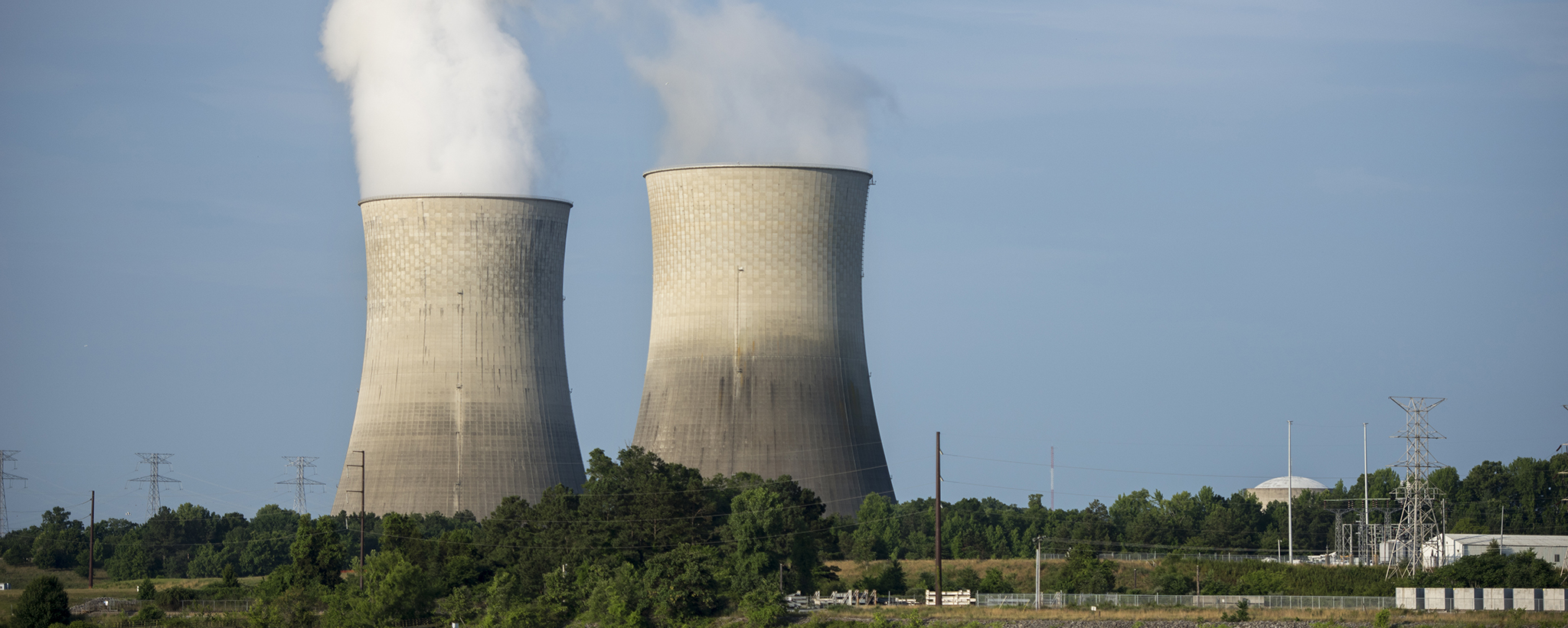
The Tennessee Valley Authority (TVA) expects to phase out its coal generation by 2035, but achieving net-zero carbon emissions without raising power prices or adversely affecting reliability will require substantial investments in energy storage and carbon capture and sequestration (CCS). TVA also will need to extend the lifetime of its nuclear power, and adopt the use of small modular reactors (SMRs), said Jeffrey Lyash, its president and CEO. 

During a fireside chat with Sen. Joe Manchin (D-W.Va) on April 28 hosted by the nonprofit international think tank the Atlantic Council—an event focused on the future of low carbon generation in the Appalachian region—Lyash noted the self-funded U.S. corporate agency has already retired 60% of its coal generation. “Our coal units will continue to retire over the next 15 years because they’ve reached the end of life,” he said. 

Read entire article by POWER magazine.

AESSEAL Receives Queen’s Award for Enterprise

AESSEAL® recently received the Queen’s Award for Enterprise in the Innovation category for a specialized mixer seal of the type required in vaccine manufacture and other complex industrial operations. This is the 12th Queen’s Award received by AESSEAL and the 14th for the AES Engineering Ltd. Group. 

The Short Canister Mixer Seal, which is the subject of the latest award, is the world’s first Zone 0, 1 and 2 range certified mixer seal, based on a modular platform and is capable of sealing the most difficult applications in the world by design. While mechanical seals are a relatively hidden component of global manufacturing processes they are also vital. The best sealing technology makes a major contribution to the reliability, profitability and environmental performance of industrial applications. Without mechanical seals there would be no power generated, no refining, no fine chemical industry and a very limited pharmaceutical industry.

AESSEAL® does not claim to be the unique supplier of mechanical seals, but it still proudly manufactures a full product range from its global operations in a strategically important area of precision engineering.

As pharmaceutical products in particular cannot tolerate any contamination into the Mixer or Reactor seal vessel, an inert gas is often the preferred choice of barrier fluid. By design AESSEAL® always intended to add an internal and external gas lift version to its Short Canister Mixer Seal and, continuing the company’s relentless pursuit of excellence, it will be introducing a full range of Zone 1 and Zone 2 certified gas lift seals, suitable for use in the production of vaccines, on the 1st June 2021.

EDA Unveils Updated Investment Priorities

The U.S. Economic Development Administration (EDA) today announced that it has updated its investment priorities.

EDA’s investment priorities provide an overarching framework to ensure that our investment portfolio – ranging from planning to infrastructure construction – contributes to local efforts to build, improve, or better leverage economic assets that allow businesses to succeed and regional economies to prosper and become more resilient.

The updated investment priorities support the U.S. Commerce Department’s agenda, which is driven by four pillars to increase American competitiveness:

  1. Revitalizing U.S. manufacturing and developing advanced industries
  2. Building a 21st century workforce
  3. Maintaining leadership in global innovation
  4. Promoting American businesses, at home and abroad.

Notably, ‘Equity’ has been added to the top of the investment priority list. EDA is committed to working with populations and underserved communities that have been denied a full opportunity to participate in aspects of economic prosperity in the past.

Understanding that innovation is the backbone of our economy and that we must invest to grow the businesses of the future, including those that address climate change, Technology-based economic development and Environmentally-Sustainable Development have been added as priorities. And, coal and power plant communities are specifically addressed under the Recovery & Resiliency priority. EDA’s commitment to supporting strategies that advance workforce development, manufacturing, and export/foreign direct investment strategies remains unwavering.

EDA’s updated investment priorities are:

  1. Equity: Economic development planning or implementation projects that advance equity across America through investments that directly benefit 1) one or more traditionally underserved populations, including but not limited to women, Black, Latino, and Indigenous and Native American persons, Asian Americans, and Pacific Islanders or 2) underserved communities within geographies that have been systemically and/or systematically denied a full opportunity to participate in aspects of economic prosperity such as Tribal Lands, Persistent Poverty Counties, and rural areas with demonstrated, historical underservice. For more information on these populations and geographies see: https://www.whitehouse.gov/briefing-room/presidential-actions/2021/01/20/executive-order-advancing-racial-equity-and-support-for-underserved-communities-through-the-federal-government/.
  2. Recovery & Resilience: Economic development planning or implementation projects that build economic resilience to and long-term recovery from economic shocks, like those experienced by coal and power plant communities, or other communities impacted by the decline of an important industry or a natural disaster, that may benefit from economic diversification-focused resilience.
  3. Workforce Development: Economic development planning or implementation projects that support workforce education and skills training activities directly connected to the hiring and skills needs of the business community and that result in well-paying, quality jobs.
  4. Manufacturing: Economic development planning or implementation projects that encourage job creation, business expansion, technology and capital upgrades, and productivity growth in manufacturing, including efforts that contribute to the competitiveness and growth of domestic suppliers or to the domestic production of innovative, high-value products and production technologies.
  5. Technology-Based Economic Development: Economic development planning or implementation projects that foster regional knowledge ecosystems that support entrepreneurs and startups, including the commercialization of new technologies, that are creating technology-driven businesses and high-skilled, well-paying jobs of the future.
  6. Environmentally-Sustainable Development: Economic development planning or implementation projects that help address the climate crisis including through the development and implementation of green products, processes (including green infrastructure), places, and buildings.
  7. Exports & FDI: Economic development planning or implementation projects that enhance or build community assets to support growth in US exports or increased foreign direct investment.

EDA plays a vital role in advancing the mission of the Commerce Department by supporting community-led economic development strategies designed to create the conditions for economic growth and opportunity.

These updated investment priorities will allow us to focus our efforts to ensure that American communities are in position to remain competitive on the global stage.

For more information, please visit: www.eda.gov.

TDOT Virtual Meeting on Pellissippi Parkway Extension

The Tennessee Department of Transportation is hosting a virtual design public meeting from April 15-29 to gather public input on the proposed Pellissippi Parkway (SR-162) project from SR-33 to SR-73 (US-321).

The proposed project consists of developing a new controlled-access four-lane highway with a concrete median barrier wall and grade-separated interchanges.

Show Your Support

This meeting is being held to provide the public an opportunity to provide comments regarding the proposed project. Comments submitted through the project website will be addressed and become part of the official public transcript. The Blount Partnership encourages its stakeholders to bookmark the website and make comments in support of the project. Please allow approximately 30 minutes to view the entire meeting and associated assets.

Overview

The proposed State Route 162 Pellissippi Parkway Extension includes construction of a new transportation corridor, extending Pellissippi Parkway from its current location at SR 33 (Old Knoxville Highway) to SR 73 (US 321/Lamar Alexander Highway) in Blount County. The length of the proposed extension would be approximately 4.4 miles.

Purpose and Need

Currently, the roadway has several deficiencies. The transportation needs can be summarized as follows.

  • Limited mobility options in Blount County and Maryville due to the primarily radial roadway network that now exists
  • Poor local road network with substandard cross sections.
  • Lack of northwest/east connection of Alcoa and Maryville to help serve:
    • Expanding residential development occurring in eastern Alcoa and the Knoxville area to the north
    • Increasing demand for trips between Maryville and Alcoa, and the Knoxville area to the north
  • Safety issues on roadways in the area, including roads in the Maryville core that through-travelers between northern and western portions of the county and the eastern portions of the county must pass and numerous rear-end crashes and angle crashes have been reported due to high volumes of traffic and lack of access management along the roadways
  • Traffic congestion and poor levels of service on the major arterial roads in the study area (US 129, SR 33, US 411 and US 321)

The purpose of the project is to improve safety and mobility. The primary benefits include:

  • Enhance regional transportation system linkages.
  • Improve circumferential mobility by providing travel options to the existing radial roadway network in Blount County, Maryville, and Alcoa.
  • Improve roadway safety on the existing roadway network, including the Maryville core.
  • Achieve acceptable traffic flows (level of service) on the transportation network or not adversely affect traffic flows on the existing network.

Additionally, the parkway extension is designed to support community and growth management goals and minimize adverse impacts to neighborhoods and businesses, farmlands, and the natural and cultural environment.

The proposed project would be constructed in part with federal funding, and is therefore subject to the requirements of the National Environmental Policy Act (NEPA). An Environmental Impact Statement (EIS) has been prepared to meet NEPA requirements. The Record of Decision (ROD) for the proposed project was signed by FHWA on August 31, 2017, and is available in the Library section of this project.  

The Pandemic Made Manufacturing Stronger

Which lessons learned are here to stay?

Eileen Sweeney, Industry Week

One year into the pandemic, the manufacturing industry has undergone significant disruption and transformation. For a sector that works primarily on-site in physical spaces, the workflow and production changes were abrupt and highly impactful. Leaning on technology, adapting quickly to new demands and supply chain restrictions, and adopting contactless safety processes—all while maintaining productivity and manufacturing essential items to fight COVID-19—were enormous challenges to overcome.

But after one full year of responding and adapting to this crisis, manufacturers have learned a lot about their capabilities. Widespread remote work had never been a serious consideration, but with this shift came some surprising, welcomed insights. Steps to reduce contact and prevent the risks of COVID-19 also improved overall efficiency and workforce safety. The need to pivot to manufacture new products, including PPE, opened the door for new partnerships. Border closures sparked new exploration in global supply-chain innovations. These discoveries have led many to re-evaluate how new processes, ways of working, and adaptability could determine the direction the industry is headed.

Read complete article.

The Remote Work Experience & Plans to Return to the Office

Posted by IndustrySelect on Wednesday, April 7, 2021

The COVID-19 Pandemic has radically changed the way America works, with 44% of U.S. employees working from home (compared to 17% before the Pandemic). Now one year into a remote work setting and U.S. workers are getting vaccinated and many companies are looking to fully reopen their offices. So how do professionals view the prospect of returning to the office? This article will explore some key statistics gathered from around the web that illuminate the work-from-home experience and how professionals are feeling about a potential return to the office.

How do Americans like working from home?

Turns out, quite a lot overall, but sentiment can vary depending on age and industry. One Gallup Poll published in February found that:

• 56% of U.S. workers were “always” or “sometimes” working from home as of January 2021.
• 44% of those working remotely said they would prefer to work from home even when it was safe to return to the office.
• Interestingly, 39% of respondents recently stated they would prefer to return to the office. The percentage of respondents wishing to return to the office has actually increased since July 2020, when only 28% reported a desire to return to the office. This suggests more workers are tiring of remote work or perhaps are more comfortable now that there’s a vaccine available.

However, another study conducted by LiveCareer found that nearly 30% of professionals reported plans to quit if their employer demanded they return to the office after the pandemic. This online survey of 1,022 workers also found:

• 61% of white-collar workers said they wish to continue working remotely indefinitely, even once the Pandemic is over.
• While only 7% of retail, wholesale and distribution center workers reported plans to quit if they had to return to the office, a stunning 35% of IT workers said they would jump ship.

And when asked how often they would prefer to work in the office should some in-office work become mandatory:

• 30% reported 3 days a week.
• 25% reported 2 days a week.
• 19% said they’d prefer 1 day a week.
• 9% said they’d prefer 4 days a week.

Another study from Owl Labs found that:

• 77% of respondents reported having the option to work from home would make them happier.
• 1 in 2 people won’t return to jobs that don’t offer remote work after the Pandemic is over.
• 23% of employees report being willing to take a 10% pay cut in order to continue working from home.

Another major survey of 9,000 “knowledge” workers conducted by Slack delivers some interesting demographic insights. Specifically, older workers, those in the 55 to 64 age range category, were the most likely to wish to continue working remotely. Here’s the full breakdown of workers by age who wish to continue working remotely:

• 12% of 16-24 year-olds.
• 11% of 25-34 year-olds.
• 11% of 35-44 year-olds.
• 15% of 45-54 year-olds.
• 17% of 55 to 64 year-olds.

Interestingly, the younger age groups are least likely to want to continue working remotely. As Fortune Magazine points out, this may be due to younger workers finding it difficult to stay productive at home, with 43% of them surveyed reporting their productivity has decreased since they started working remotely. It also may be that younger workers miss the social aspect of being in the office and engagement with their mentors.

Challenges & Opportunities in Remote Work

So what is driving opinions when it comes to working remotely or heading back to the office? There are multiple challenges and benefits to both to the employer and the employee when it comes to remote work. Consider these stats:

• According to a study by CoSo Cloud30% of telecommuters save up to $5,240 each year in the form of reduced costs for commuting, parking and food.
• An estimate from Global Workplace Analytics finds that telecommuters save on average the equivalent of 11 workdays per year in commute time.
• A separate estimate from Global Workplace Analytics finds businesses can save an average of $11,000 per telecommuter in the form of increased productivity, lower real estate costs, reduced absenteeism and turnover.

And when asked in this Buffer survey to describe their biggest struggle with working remotely:

• 22% reported unplugging after work as the greatest challenge
• 19% reported loneliness
• 17% reported collaborating and/or communication
• 10% pointed to distractions at home.

The rest reported staying motivated and not taking vacation time as their biggest struggle.

And in the LiveCareer Survey, when asked what they considered the main advantage of remote work:

• 64% of those surveyed cited flexibility
• 44% cited improved work life balance.
• 40% cited feeling safer.
• 29% cited increased productivity.
• 10% said being able to acquire skills as the main advantage.

And what about health and wellness trends? Last week, the Census Bureau released some fascinating new statistics on the health and demographic trends of those who switched to telework. The Census Bureau study found that those who switched to telework have higher income, education and better health. Specifically:

• Those who reported being in excellent health were more than twice as likely to have had an adult in their household working from home.
• Among those reporting poor health, 79% reported that no one in their household switched to remote work.

Of course, does not mean that remote work necessarily improves health (or income or education level); indeed many workers have reported some adverse health effects from working remotely. Consider one survey from Aetna, which found that among 4,011 employees in four different countries surveyed:

• 32% report concerns over stress, while 43% report weight gain.
 88% of all workers in the 18-24 year-old range reported poor mental health has impacted their productivity.

Meanwhile, a separate survey from AllWork finds that 50% of respondents report that remote work has had a negative impact on their emotional or mental health.

Yet, an interesting sleep and rest-related study from mattress company Amerisleep found that 80% of remote workers experience less work-related stress. Interestingly, the same survey found 45% of remote workers admitted they worked from their bed on average 11 hours per workweek, with marketing and advertising workers among those working the most from bed, at 10 hours per week.

The same study found that remote workers were 57% were more likely than the average American to be satisfied with their jobs. Not surprising, considering that nearly 65% of remote workers said they experienced reported good sleep quality during the week and that 38% admitted to napping on average 9 hours per workweek.

Google Says It Contributed $4.6 Billion to Tennessee’s Economy

Google’s U.S. economic impact totals $50 billion more than Tennessee’s entire gross domestic product, according to the tech company’s annual evaluation.

Nationwide, $426 billion was generated by Google and its subsidiaries, its new 2020 Economic Development Report states.

Google ad revenue, payments to YouTube creators and other publishers, and charitable donations totaled $4.6 billion in the Volunteer State in 2020.

The technology giant employs about 250 people as engineers, suppliers and more in Tennessee. Its impact is nevertheless felt far and wide.

“It’s a really different thing than what we think of as a traditional economic impact,” said Bill Fox, director of the Boyd Center for Business and Economic Research in Knoxville. “It’s not creating new income streams but it is helping us do things better. It’s created efficiencies and productivity gains.”

Google describes its estimates as conservative because they don’t include consumer cost savings from using Google Maps, Analytics, and other digital services.

About 32,000 business, publishers and nonprofit organizations incorporated Google products to boost their online presence and improve communication in 2020, the report found.

The company is preparing to invest more than $7 billion this year in new data centers.

“I believe a lasting economic recovery will come from local communities, and the people and small businesses that give them life,” Google and Alphabet CEO Sundar Pichai said. “Google wants to be a part of that recovery.”

Google opened its first data center in Tennessee in 2019 with a new $600 million facility in Clarksville.

Last year, the firm gave out $558,000 in charitable grants in the state.

“They’re adding value but that’s different than adding employment,” Fox said. They’ve helped businesses do things more efficiently, which in many cases means with fewer workers.”

Another form of investment the company offers is startup funding for new digital businesses.

Nashville-based Possip started in 2017 with a boost from Google’s Startups for Women Founders program.

Now, Possip employs 25 people operating its digital service providing direct parent feedback to schools and districts.

“Google’s impact came because of the disruption that allowed us to have the services we had before but with more efficiency,” Fox said. “It’s much easier for me to find information on Google than it was in the Yellow Pages.”

Source: Knoxville News Sentinel, Sandy Mazza

East Tennessee has some of the best employers

In an article published by Knoxnews, East Tennessee has some of the best employers according to a list made by Forbes.

Several regional businesses and major employers in East Tennessee, including Clayton Homes and Dollywood, made Forbes’ lists of America’s Best Large Employers and America’s Best Mid-sized Employers.

Clayton Homes ranked No. 323 on the list of large employers, and Dollywood ranked No.138 on the mid-size list.

But it was Brunswick, which manufactures Sea Ray boats, that ranked the highest from East Tennessee: No. 10 in the large category. The Sea Ray Boats division is headquartered in Knoxville.

More on the list. But how was it made?

Forbes compiled the list in partnership with research firm Statista, surveying 50,000 Americans working at businesses with more than 1,000 employees. Participants rated their willingness to recommend their employers to family and friends.

The mid-size list includes 500 businesses with between 1,000 and 5,000 U.S. employees. The large list ranks 500 businesses with more than 5,000 U.S. employees.

Several other businesses headquartered in East Tennessee were recognized.

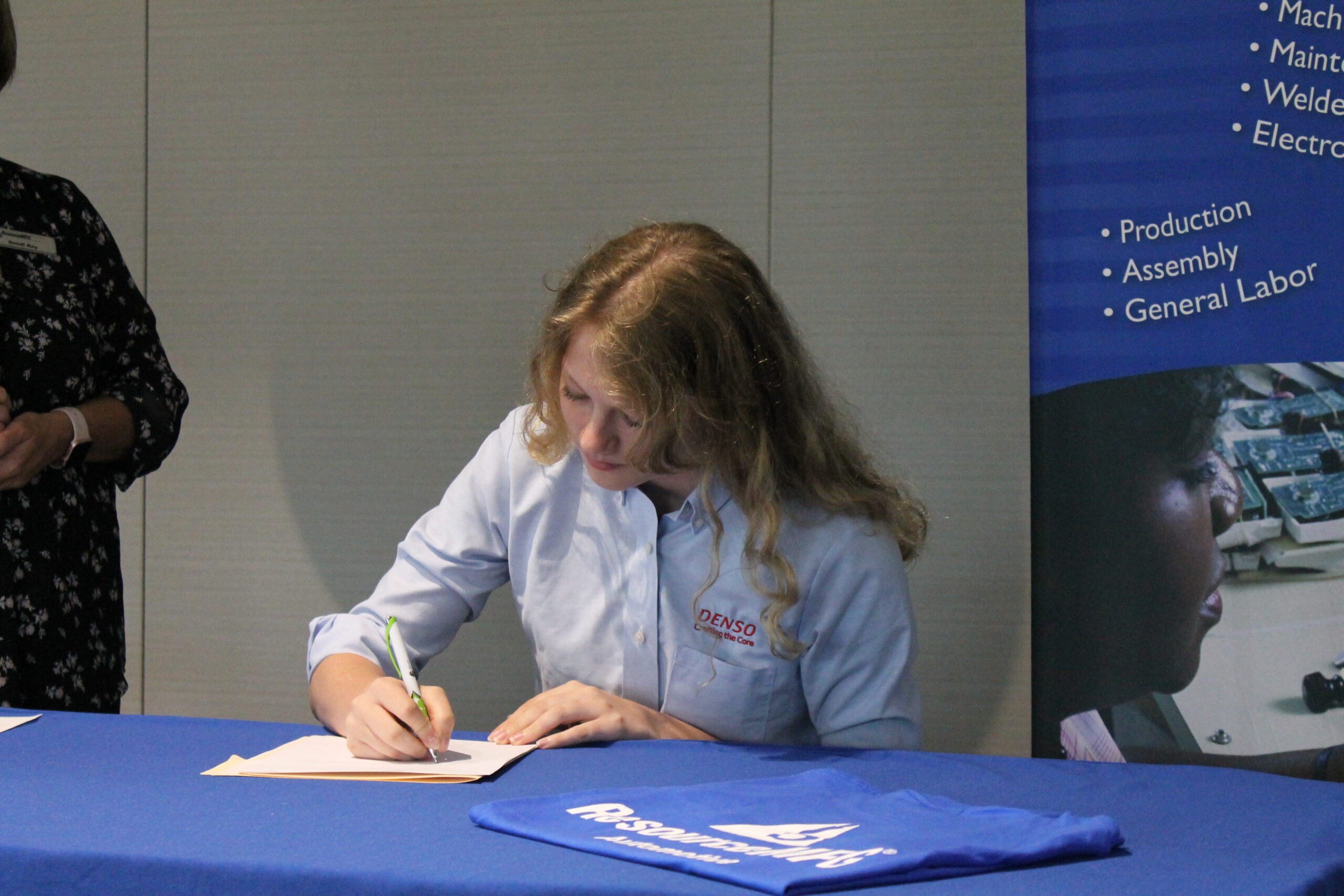
Tennessee Valley Authority ranked No. 129 on the large employers list. DENSO, which operates its largest U.S. manufacturing facility in Maryville, ranked No. 317 on the mid-size list. 

Those with several East TN employees

The lists also include businesses that have a significant employee base in East Tennessee. These companies all employ an estimated 200 or more people in the Knoxville area, according to the Knoxville Chamber. 

The large list includes:

  • ADT Security Systems
  • AT&T
  • Accenture
  • Bass Pro Shops
  • Best Buy
  • Bloomin’ Brands
  • Chick-fil-A
  • Coca-Cola
  • Comcast
  • Cracker Barrel
  • Domino’s
  • FedEx
  • Gap
  • Hilton
  • Home Depot
  • Intercontinental Hotels
  • Lowe’s
  • Marriott International
  • Papa John’s
  • PepsiCo.
  • Publix
  • Red Lobster
  • Siemens
  • Starbucks
  • State of Tennessee
  • Subway
  • Target
  • Texas Roadhouse
  • The Cheesecake Factory
  • Travelers
  • U.S. Bank
  • U.S. Cellular
  • U.S. Department of Energy
  • U.S. Postal Service
  • UPS
  • Verizon Communications
  • Wendy’s 
  • Wyndham Destinations
  • YMCA

The mid-size list also includes Choice Hotels International and Melaleuca. 

Business reporter Brenna McDermott can be reached at [email protected]. Follow along with her work on Twitter @_BrennaMcD

Education and Training Will Be Crucial for the Recovery

Great assessment in Bloomberg LP on manufacturing’s skills gap. The Manufacturing Institute study in 2018 showed that manufacturing will have 2.4 million unfilled jobs by 2028 due to the lack of skilled workers.

The pandemic has blighted the career prospects of millions of Americans — but even after this crisis has passed, harnessing the country’s potential will be a formidable challenge for the new administration. To build a strong and lasting recovery, with a thriving, well-paid workforce, the U.S. will have to get a lot better at equipping people with the skills the economy needs.

The task starts with K-12 education, because that’s where inequality and lack of opportunity begin. If the schools fail, no later interventions can make up the difference. As the country lays this stronger foundation, a comprehensive workforce agenda should boost investments in career and technical education, help workers get training, and build partnerships between educational providers and employers. Immigration reform also has a role, because foreigners with talent and ambition can help revitalize the economy.

Read entire article.

Professional young industrial factory woman employee working with machine parts putting, checking and testing industrial equipments cables in large Electric electronics wire and cable manufacturing plant factory warehouse